 Skip to content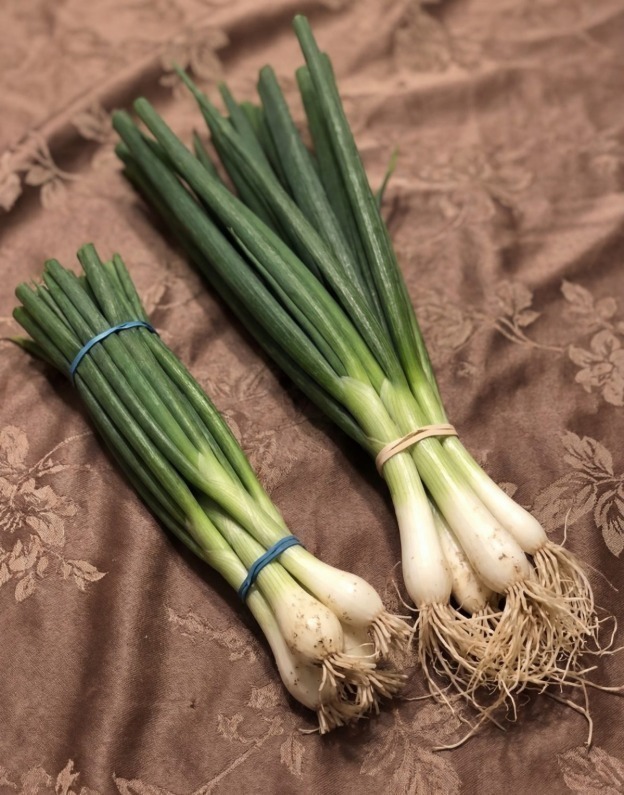
Now here’s where things get slightly different.
Spring onions are often confused with green onions, but they are actually a more mature version of the plant.
Key differences:
- Larger, more developed bulb at the bottom
- Stronger, more onion-like flavor
- Thicker texture compared to green onions
Spring onions are basically harvested later in the growth cycle, which gives them a stronger taste.
They are commonly used in:
- Roasted dishes 🍖
- Grilled recipes 🔥
- Hearty stews 🍛
Because of their stronger flavor, they are not always ideal as raw garnishes.
🧅 Quick Comparison (Simple Breakdown)
Let’s make it easy:
🟢 Green Onions / Scallions:
- Mild flavor
- Thin white base
- No fully developed bulb
- Often eaten raw or lightly cooked
🟡 Spring Onions:
- Stronger flavor
- Larger bulb
- More mature plant
- Better for cooking and roasting
🤯 Why the Confusion Exists
The confusion mainly comes from:
- Different countries using different names
- Grocery stores labeling produce inconsistently
- Recipes written across cultures using local terminology
For example:
- A U.S. recipe might say “scallions”
- A UK or Asian recipe might say “spring onions”
- A grocery store might label everything as “green onions”
So people assume they are all different things—but in reality, they are just different stages or naming conventions of the same plant family.
🍳 Can You Substitute Them in Recipes?
Yes—but with small adjustments.
If a recipe calls for green onions/scallions:
You can safely use spring onions, but expect:
- A stronger taste
- Slightly crunchier texture
If a recipe calls for spring onions:
You can use green onions/scallions, but:
- The flavor will be milder
- You may need more quantity for the same punch
So while they are interchangeable, the taste outcome can vary slightly.
🧑🍳 Cooking Tips for Best Results