 Skip to content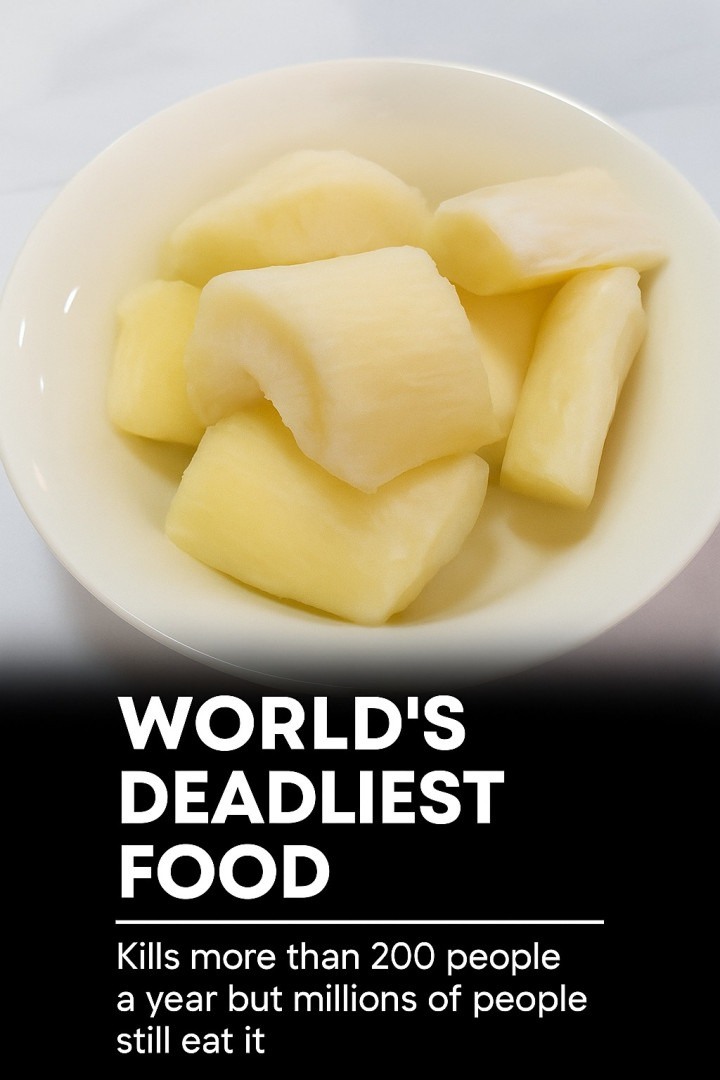
Food is something we trust every single day. We eat it to survive, gain energy, and stay healthy. But what if one of the most commonly consumed foods in the world could also be dangerous if not prepared correctly?
It sounds unbelievable, but there are certain natural foods that contain toxic compounds in their raw or improperly processed form. When handled the wrong way, they can become extremely harmful—even deadly.
In this article, we will explore one of the world’s most dangerous foods, why it can be risky, how people consume it safely in many countries, and what lessons we can learn to avoid danger.
☠️ What Is Considered One of the “Deadliest Foods” in the World?
When experts talk about deadly foods, they are usually referring to foods like:
- Cassava (Manioc) 🌿
- Pufferfish (Fugu) 🐡
- Certain wild or improperly prepared beans and seeds
Among these, cassava is often considered one of the most widely consumed yet potentially dangerous foods in the world when not prepared properly.
Cassava is a root vegetable that feeds over 800 million people globally, especially in parts of Africa, Asia, and South America. It is rich in carbohydrates and serves as a staple food in many regions.
However, the danger lies not in the food itself—but in how it is handled.
⚠️ Why Cassava Can Be Dangerous
Cassava naturally contains compounds called cyanogenic glycosides, which can release cyanide when the root is not properly processed.
Cyanide is a toxic substance that, in high amounts, can interfere with the body’s ability to use oxygen.
If cassava is eaten raw or improperly prepared, it can lead to serious health risks.
🧠 What Happens If It Is Not Prepared Correctly?
Eating improperly processed cassava can lead to symptoms of poisoning, such as:
- Headaches 😣
- Dizziness
- Nausea and vomiting
- Weakness and fatigue
- Difficulty breathing (in severe cases)
- Long-term nerve damage if exposure is repeated
In extreme cases, high exposure to cyanide can be life-threatening.
However, it is very important to understand that these risks occur only when cassava is not prepared correctly.
🍽️ So Why Do Millions of People Still Eat It?
Despite its risks, cassava is still a vital food source because: