 Skip to content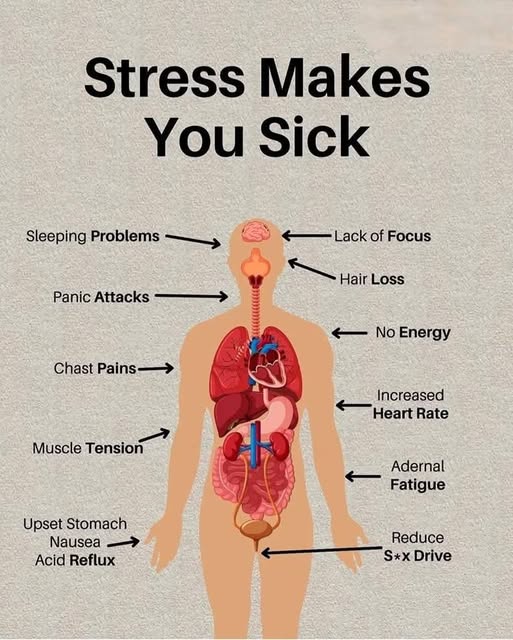
Stress is something every human experiences, but what most people don’t realize is that stress is not just a feeling—it is a full-body biological reaction. It affects your brain, heart, hormones, digestion, immune system, and even how you think, sleep, and interact with others.
In small amounts, stress can actually help you perform better, stay alert, and react quickly in difficult situations. This is known as “acute stress,” and it is part of the body’s natural survival system.
But when stress becomes constant or chronic, it stops being helpful and starts becoming harmful. Over time, it silently damages your health from the inside out.
Let’s explore exactly how stress affects your body and what you can realistically do to manage it in daily life.
🧠 What Stress Really Is (Simple Explanation)
When you feel stressed, your brain activates a survival system known as the fight-or-flight response. This system releases stress hormones such as:
- Cortisol
- Adrenaline
- Norepinephrine
These hormones are designed to prepare your body for danger by:
- Increasing heart rate
- Raising blood pressure
- Sharpening focus
- Boosting short-term energy
This response is useful in emergencies. However, in modern life, stress is often triggered by non-life-threatening situations such as:
- Work pressure
- Financial worries
- Relationship problems
- Social media overload
- Daily responsibilities
When this system stays activated for too long, it creates imbalance in the body.
❤️ How Chronic Stress Affects Your Heart and Blood Pressure
One of the first systems affected by long-term stress is the cardiovascular system.
When stress hormones remain high, your heart works harder than normal. Over time, this can lead to:
- Persistent high blood pressure
- Increased heart strain
- Irregular heartbeat sensations
- Higher risk of cardiovascular problems
Many people do not realize that emotional stress can physically burden the heart in the same way poor lifestyle habits do.
🧠 Stress and Brain Function: Focus, Memory, and Mood
Your brain is extremely sensitive to stress hormones, especially cortisol. When cortisol levels remain high for long periods, it can affect how your brain functions.
You may start noticing:
- Difficulty concentrating
- Memory lapses or forgetfulness
- Overthinking small problems
- Increased anxiety or irritability
- Reduced motivation
Stress can also affect the prefrontal cortex, the part of the brain responsible for decision-making and emotional control. This is why stressed people often feel mentally “foggy” or overwhelmed.
😴 Stress and Sleep Disruption
Sleep is one of the first things affected by stress, and poor sleep makes stress even worse—creating a difficult cycle.
Stress can cause: