 Skip to content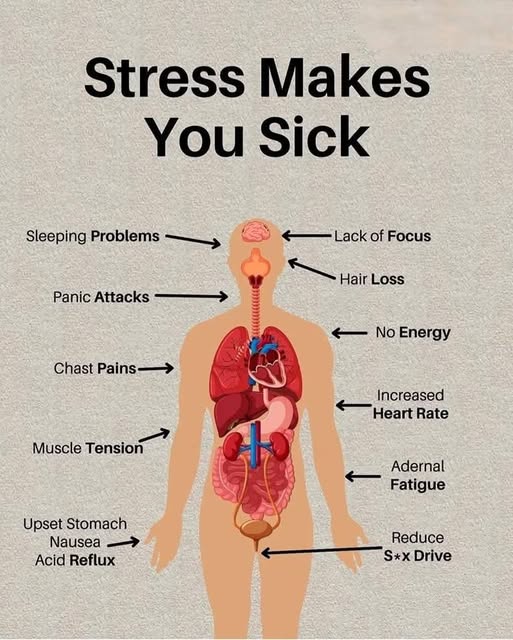
Constant exposure to information increases stress levels.
To reduce this:
- Limit social media time
- Avoid negative news consumption
- Take short digital breaks during the day
A quieter mind leads to better emotional balance.
🥗 5. Eat Balanced, Nourishing Foods
Nutrition plays a big role in stress regulation.
Focus on:
- Whole foods (fruits, vegetables)
- Healthy fats (nuts, olive oil)
- Protein sources
- Drinking enough water
Avoid excessive sugar and processed foods, which can worsen mood swings.
🗣️ 6. Talk and Express Your Feelings
Emotional pressure builds up when it is not expressed.
Talking to someone can help:
- Reduce mental burden
- Gain perspective
- Release emotional tension
This can be a friend, family member, or professional support if needed.
🌟 Final Thoughts
Stress is a natural part of life, but when it becomes constant, it can affect nearly every system in your body—from your heart and brain to your digestion and immune system.
The key is not to eliminate stress completely, but to manage it in a healthy and consistent way.
Small daily habits—like movement, breathing, better sleep, balanced nutrition, and emotional expression—can significantly reduce its impact over time.
Because a calm mind doesn’t come from a stress-free life…
It comes from learning how to handle stress in a healthy way.