 Skip to content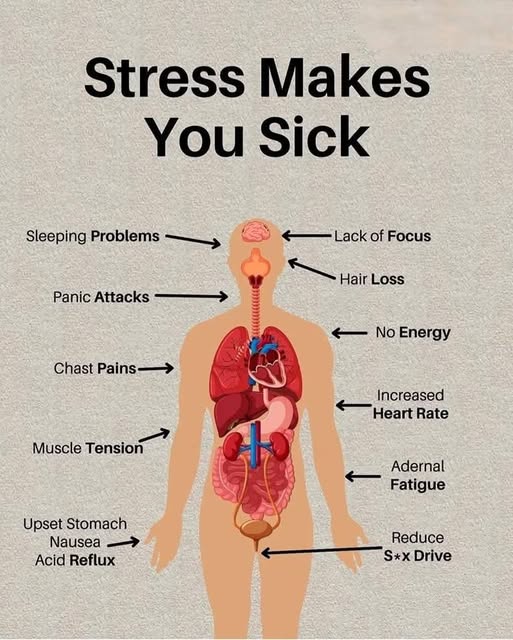
Trouble falling asleep
When your brain remains in a “high alert” state, it becomes harder to fully relax into deep sleep stages.
Over time, lack of sleep affects energy, mood, immune function, and mental clarity.
🍽️ Digestive System Problems Caused by Stress
Your gut and brain are closely connected through what scientists call the gut-brain axis.
When stress levels increase, digestion often becomes one of the first systems affected.
This can lead to:
- Stomach cramps or discomfort
- Bloating
- Changes in appetite (eating too much or too little)
- Acid reflux
- Irregular bowel movements
Stress can slow digestion or speed it up depending on the person, which is why some people lose appetite while others overeat when stressed.
🛡️ Stress and the Immune System
Long-term stress weakens your immune defenses. When your body is constantly in survival mode, it reduces resources used for protection and recovery.
This may result in:
- Getting sick more frequently
- Slower healing of wounds
- Increased inflammation in the body
- Fatigue and low energy
A weakened immune system makes it harder for your body to defend itself against infections and everyday illnesses.
😓 Physical Symptoms of Stress in the Body
Stress is not only mental—it shows up physically in many ways. Common symptoms include:
- Headaches or migraines
- Tight shoulders and neck pain
- Jaw clenching or teeth grinding
- Muscle tension
- Chest tightness
- Fatigue even after rest
These symptoms often appear because the body remains in a state of tension for too long.
🌿 Powerful Ways to Manage Stress Naturally
The good news is that stress is manageable. You cannot eliminate it completely, but you can control how your body responds to it.
🚶♂️ 1. Regular Physical Movement
Movement is one of the most effective stress reducers. It helps burn excess stress hormones and releases endorphins (natural mood boosters).
You don’t need intense exercise. Simple activities are enough:
- Walking daily
- Stretching every few hours
- Light yoga or mobility exercises
- Taking short movement breaks during work
🧘 2. Deep Breathing Techniques
Breathing is directly connected to the nervous system. Slow breathing activates the “rest and relax” response.
Try this simple method:
- Inhale slowly for 4 seconds
- Hold for 4 seconds
- Exhale slowly for 6–8 seconds
- Repeat for 3–5 minutes
This helps reduce heart rate and calm the mind quickly.
💤 3. Improve Sleep Hygiene
Good sleep is essential for stress recovery.
Helpful habits include:
- Sleeping at consistent times
- Avoiding screens before bed
- Keeping your room dark and quiet
- Reducing caffeine intake in the evening
Better sleep helps reset your entire nervous system.
📱 4. Reduce Mental Overload