 Skip to content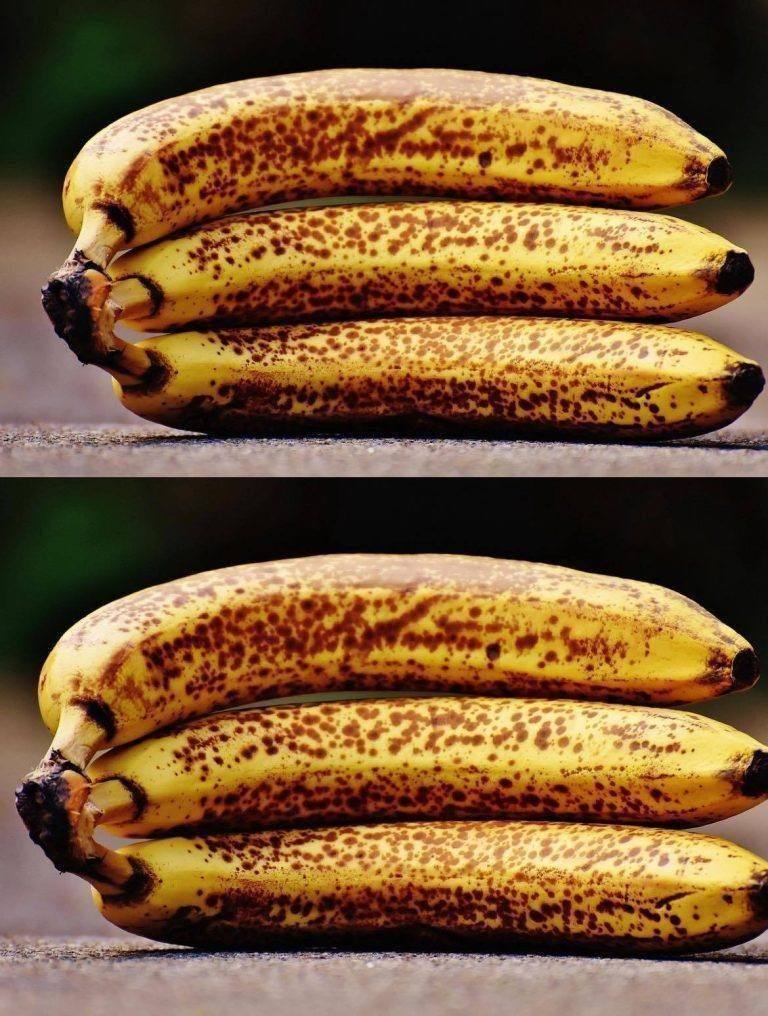
It’s a very common kitchen situation: you look at a bunch of bananas and notice black spots starting to appear. Some people immediately throw them away, thinking they are rotten or unsafe. Others still eat them without hesitation.
So what’s the truth? Are spotted bananas bad for you—or actually better in some ways?
Let’s go deeper and understand what is really happening inside the fruit 👇
🍌 What Are Black Spots on Bananas?
Banana is a naturally ripening fruit, and those black or brown spots are part of its biological aging process.
As bananas ripen:
- Starch breaks down into natural sugars
- The peel changes color from green → yellow → brown/black spots
- The inside becomes softer and sweeter
👉 In most cases, black spots are NOT a sign of spoilage—they are a sign of advanced ripening.
🍯 1. Why Spotted Bananas Taste So Sweet
As the banana matures, enzymes convert starch into simple sugars like glucose and fructose.
This leads to:
- Much sweeter taste
- Softer, creamier texture
- Stronger aroma
That’s why overripe bananas are often used in baking and desserts—they naturally act like a sweetener.
🧠 2. Easier to Digest for Most People
Very ripe bananas are often easier on the digestive system because:
- The starch has already broken down
- The fiber becomes softer
- The fruit requires less effort to digest
This can be helpful for:
- People with sensitive stomachs
- Children or elderly individuals
- Quick energy snacks
⚡ 3. Quick Energy Source
Because the starch has converted into sugar, spotted bananas provide faster energy.
They may be useful: