 Skip to content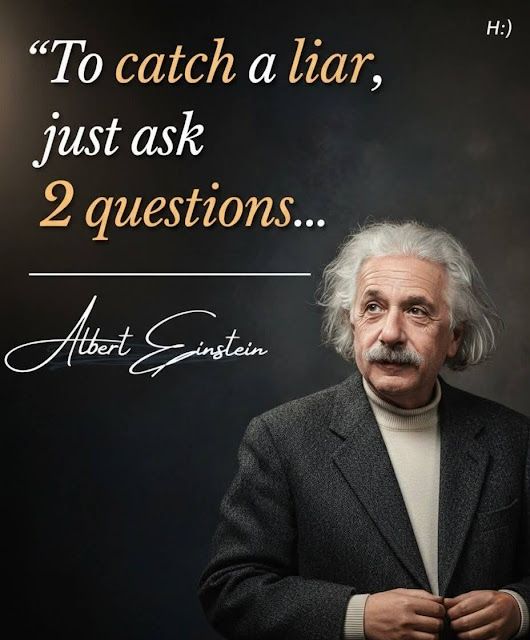
The idea that you can “catch a liar” with just two questions sounds powerful—and that’s exactly why it spreads so easily online. It suggests simplicity in something that is actually complex: human behavior.
In reality, psychology does show that certain types of questions can increase cognitive pressure and reveal inconsistencies in some situations. But there is an important difference between spotting possible deception clues and proving someone is lying.
Let’s explore what science actually says, how these “two questions” work, and where people often misunderstand them.
🧠 First: The Truth About Detecting Lies
There is no single question, gesture, or trick that can reliably expose a liar every time.
Why?
Because human communication is influenced by:
- Memory errors
- Stress and anxiety
- Personality differences
- Cultural behavior
- Communication skills
Even trained professionals (including investigators) are often only slightly better than chance at detecting lies based on behavior alone.
So instead of “catching liars,” modern psychology focuses on inconsistencies, cognitive load, and story structure.
❓ QUESTION 1: “Can you tell me the story again, but in reverse order?”
This question is often used in behavioral interviewing techniques because it increases mental effort.
🧠 What it tests:
It examines cognitive load, which is the mental effort needed to construct or recall information.
🧩 Why it can reveal differences:
- Truthful memories are recalled from real experiences
- Fabricated stories are constructed and rehearsed in sequence
- Reversing a story forces the brain to actively rebuild it in real time
🧠 What may happen in practice:
A truthful person may:
- Pause to think
- Remember details naturally
- Reconstruct events with some effort but consistency
A deceptive person may:
- Hesitate more
- Forget parts of the story
- Change small details while reversing
- Show signs of mental strain
However—and this is critical—this is NOT proof of lying. It only shows increased mental load.
❓ QUESTION 2: “What details in your story could someone else confirm?”