 Skip to content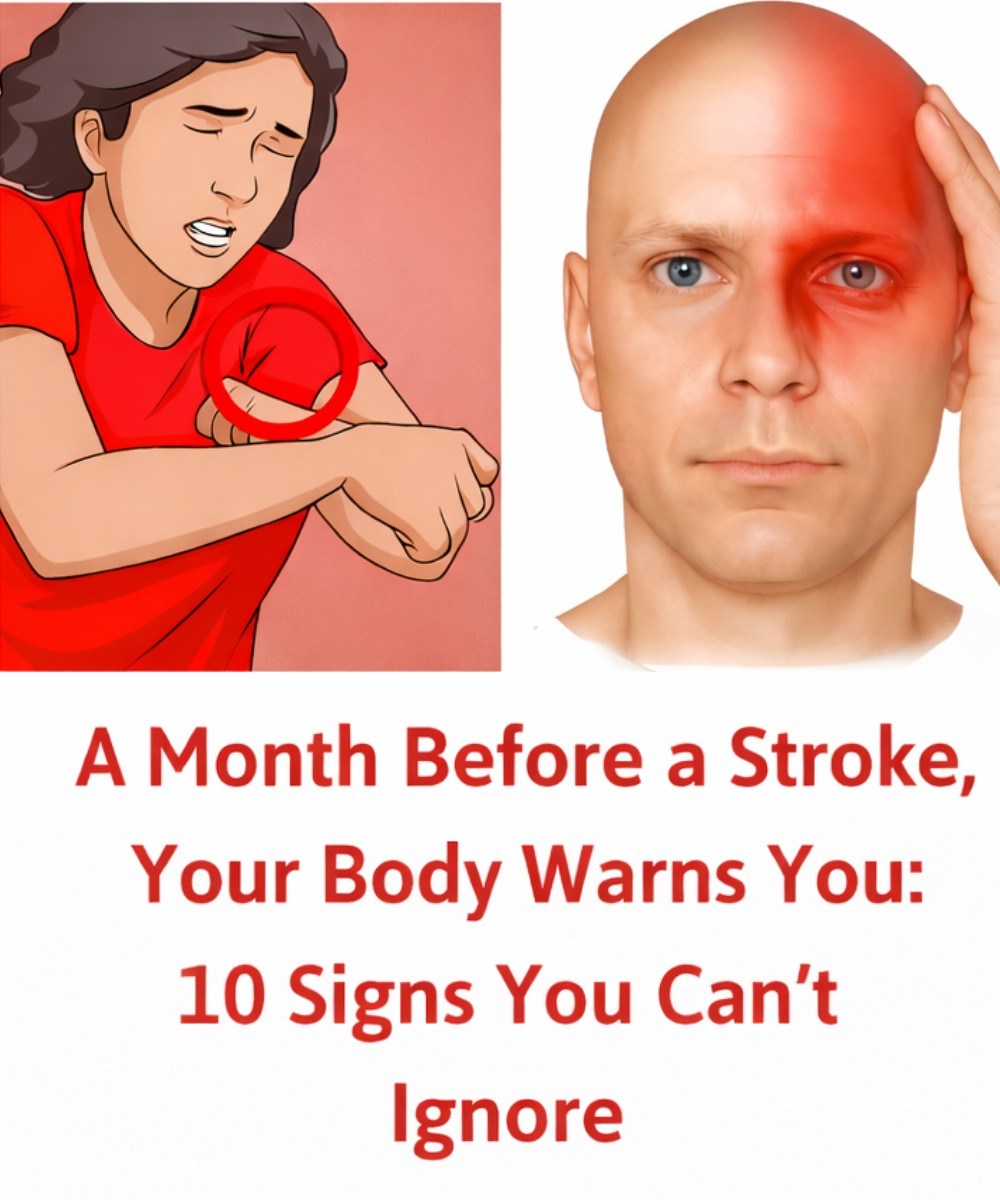
A stroke happens when blood flow to the brain is interrupted, and it is a medical emergency that requires immediate attention. While strokes often occur suddenly, doctors note that some people may experience warning signs in the days or weeks before a major event.
These signals are not guaranteed in every case, but recognizing them early can be life-saving. The key is understanding that your body sometimes gives subtle clues when circulation or brain function is not working properly.
Let’s look at 10 important warning signs that should never be ignored.
🧠 1. SUDDEN OR UNUSUAL HEADACHES
A severe or unusual headache that appears without a clear reason can sometimes be a warning sign.
👉 Especially concerning if it:
- Feels different from normal headaches
- Appears suddenly and intensely
- Does not improve with rest
😵 2. DIZZINESS OR BALANCE PROBLEMS
Frequent dizziness or feeling unsteady may indicate changes in brain circulation.
Signs include:
- Difficulty walking straight
- Feeling lightheaded
- Loss of balance
🧠 3. MEMORY OR CONFUSION EPISODES
Short-term confusion or difficulty thinking clearly can be an early signal.
👉 Examples:
- Trouble finding words
- Forgetting simple tasks
- Feeling mentally “foggy”
👁️ 4. VISION CHANGES
Sudden changes in vision should never be ignored.
This may include:
- Blurred vision
- Double vision
- Partial vision loss in one eye
🗣️ 5. SPEECH DIFFICULTY
Changes in speech can be a serious warning sign.
Look for:
- Slurred words
- Trouble forming sentences
- Difficulty understanding others
🖐️ 6. WEAKNESS OR NUMBNESS
One of the most important warning signs.
It may affect:
- Face (drooping or numbness)
- Arm or leg on one side of the body
- Sudden loss of strength
👉 Even temporary weakness should be taken seriously.
😴 7. UNUSUAL FATIGUE
Extreme or unexplained tiredness can sometimes appear before serious neurological events.
👉 Especially if:
- It is sudden
- It is unusual for the person
- It is not related to activity
❤️ 8. CHEST DISCOMFORT OR RAPID HEART RATE
While stroke is brain-related, cardiovascular issues often play a role.
Possible signs:
- Irregular heartbeat
- Chest discomfort
- Shortness of breath
🧍 9. LOSS OF COORDINATION
Difficulty controlling movements may indicate brain circulation issues.
Examples:
- Dropping objects
- Difficulty writing
- Trouble with fine motor skills
⚠️ 10. TRANSIENT ISCHEMIC ATTACKS (TIA) “MINI-STROKES”