 Skip to content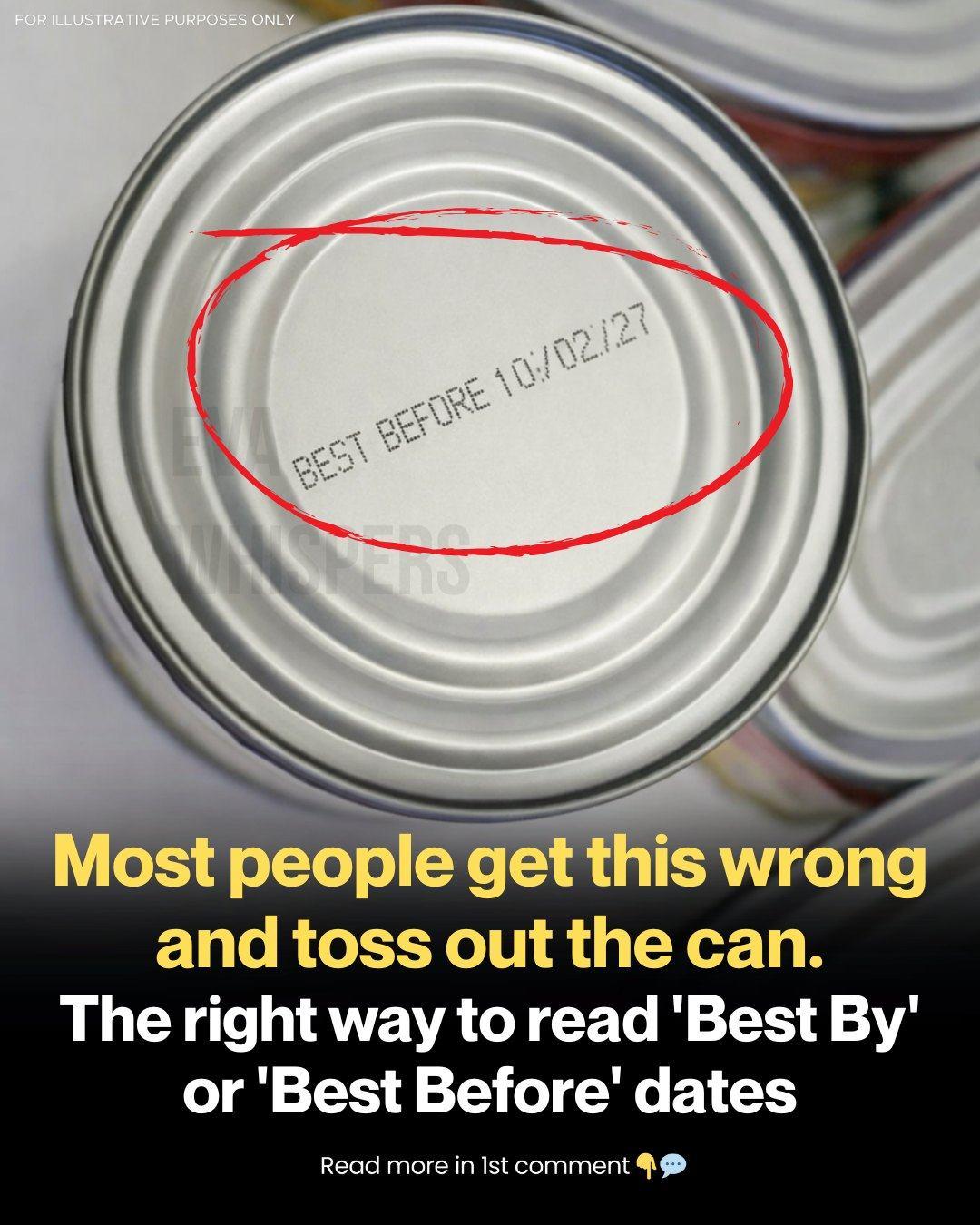
Here’s what most people get wrong: they treat all dates as strict deadlines.
Instead, experts suggest this approach:
1. Check the type of date
- “Best before” = quality guideline
- “Use by” = safety guideline (rare on canned goods)
2. Inspect the can itself
Physical condition matters more than the printed date.
3. Consider storage conditions
Cans stored in cool, dry places last much longer than those exposed to heat or humidity.
4. Trust your senses after opening
If it looks, smells, or feels off—don’t eat it.
🧂 What About Nutrition After the Date?
Even if canned food is safe past its “best before” date, its nutritional quality may slowly decline over time.
For example:
- Vitamin content may reduce slightly
- Texture may become softer
- Flavor may become less fresh
But in most cases, the food remains safe to eat if the can is in good condition.
🧠 Why People Throw Away Perfectly Good Food
There are two main reasons:
1. Confusion about labeling
Many people assume all dates mean “danger after this point,” which is not true for most canned goods.
2. Fear of food poisoning
While caution is good, unnecessary fear leads to food waste when cans are actually still safe.
Food safety experts emphasize that understanding labels correctly is one of the easiest ways to reduce household food waste.
🥫 How Long Do Canned Foods Actually Last?
While it varies depending on the food, general guidelines are:
- Low-acid foods (beans, vegetables, meat): 2–5 years or more
- High-acid foods (tomatoes, fruits): 12–18 months for best quality
Again, these are quality guidelines—not strict safety cutoffs.
🧠 Smart Storage Tips
To extend shelf life even further:
- Store cans in a cool, dry place
- Avoid direct sunlight and heat sources
- Rotate older cans to the front (“first in, first out”)
- Keep cans off damp floors
Proper storage can significantly extend usability.
🌟 Final Thoughts
The idea that canned food becomes automatically “bad” after the date printed on it is one of the most common food misconceptions.
In reality, most canned goods remain safe well beyond their labeled date—as long as the can is intact and properly stored.
The real skill is not blindly following the date, but knowing how to read the condition of the can itself.
So next time you reach for a can and see a date that has passed, don’t rush to throw it away. Take a closer look—you might be wasting perfectly good food.
Understanding labels correctly doesn’t just save money—it helps reduce food waste and makes you a smarter, more confident consumer 🥫✨