 Skip to content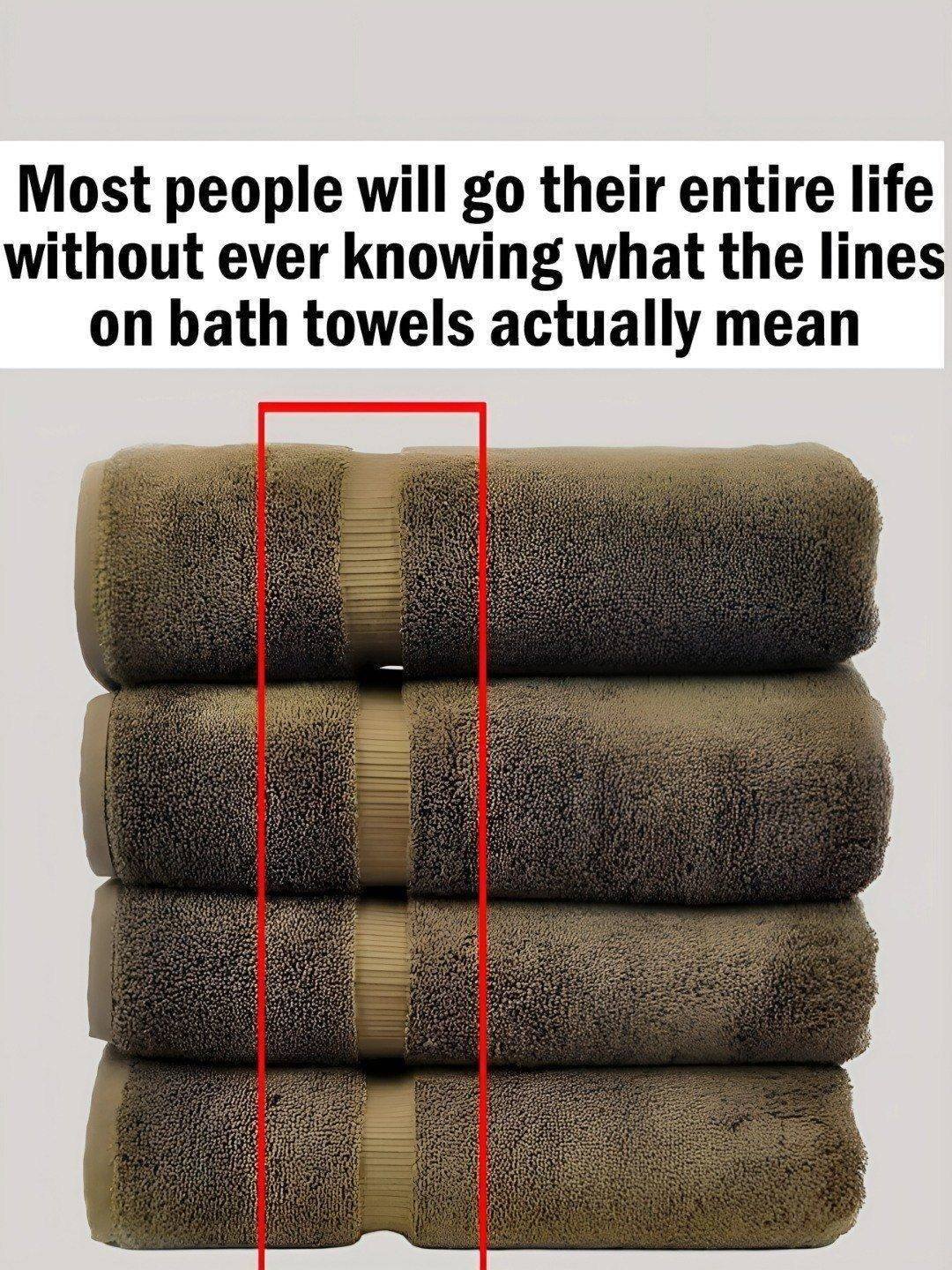
In textile production, these lines serve another purpose:
- They help machines cut and finish towels properly
- They act as visual guides during production
- They give towels a clean, professional look
So they are not only functional but also part of quality control.
🎨 6. They Are Part of Design and Branding
Beyond function, towel lines are also used for:
- Style and aesthetics
- Brand identity
- Luxury appearance
Some high-end towels use thicker or more detailed borders to look more premium.
🧠 Common Myths About Towel Lines
Let’s clear up some misunderstandings:
❌ “They are just decoration”
Not true—they have structural function.
❌ “They indicate size or quality rating”
Not directly. Quality depends on fabric, not just the lines.
❌ “They are added after weaving”
Wrong. They are woven into the towel during production.
🧵 Why Some Towels Have More Lines Than Others
You might notice differences:
- Luxury towels → wider, decorative borders
- Standard towels → simple thin lines
- Hotel towels → reinforced for heavy use
This depends on design, price, and intended use.
🧺 Do These Lines Affect Softness?
Slightly, yes—but only at the edges.
- The border area is less fluffy
- The center remains soft and absorbent
So when you dry yourself, you’re mainly using the soft middle section.
💡 Final Thoughts
The lines on bath towels are not random decoration—they are a combination of:
- Engineering
- Durability design
- Manufacturing technique
- Aesthetic style
They help towels last longer, keep their shape, and perform better.
So next time you see those lines, you’ll know they are doing real work—not just sitting there for looks. 🛁✨