 Skip to content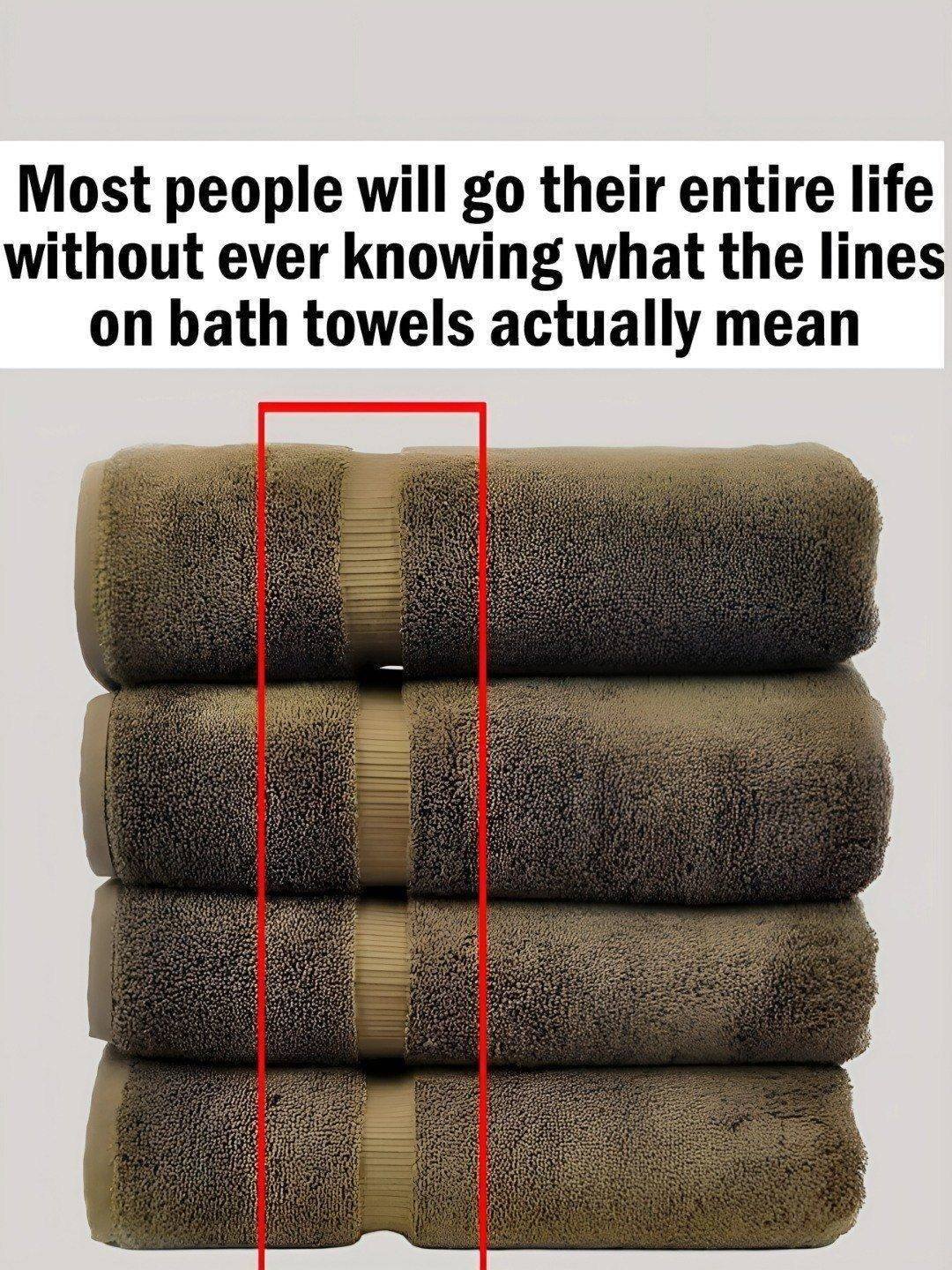
Have you ever looked closely at a bath towel and noticed those straight lines, borders, or decorative bands near the edges—and wondered what they’re actually for?
Many people think they are just design choices, but in reality, those lines have important practical and manufacturing purposes. They are not random at all.
Let’s uncover the real meaning behind them.
🧵 1. They Are Called “Dobby Borders”
The lines you see on towels are usually part of something called a dobby border.
A dobby border is a specially woven section that is made using a different weaving technique than the main towel.
This creates:
- Patterns (lines, squares, or geometric shapes)
- A slightly tighter weave
- A more structured edge
So those lines are not printed—they are actually woven into the fabric.
🧺 2. They Help Prevent Fraying
One of the most important purposes of towel lines is durability.
Without reinforced edges, towels would:
- Start unraveling after washing
- Lose threads at the ends
- Wear out much faster
The woven lines act like a strengthening barrier, helping the towel last longer even after many washes.
💧 3. They Improve Absorption Balance
The decorative border also helps control how the towel absorbs water.
The center part of the towel is designed to be:
- Soft
- Thick
- Highly absorbent
While the border is:
- Tighter woven
- Less fluffy
- More structured
This balance helps the towel dry better and keeps its shape.
🧼 4. They Help Towels Keep Their Shape
If towels were made entirely from thick, fluffy fibers, they would:
- Stretch out easily
- Lose structure
- Become uneven over time
The lines help maintain a flat, rectangular shape, even after repeated washing and drying.
🏭 5. They Are Also a Manufacturing Standard