 Skip to content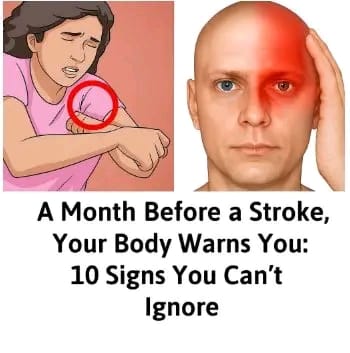
A stroke is often seen as something that happens suddenly—but in many cases, the body may give early warning signs days or even weeks before it occurs. The problem is that these signals are often subtle, temporary, or mistaken for fatigue or stress.
Recognizing them early can make a life-changing difference. A stroke happens when blood flow to the brain is interrupted, and quick action can prevent long-term damage.
Here are 10 warning signs that may appear before a stroke—and why you should never ignore them.
🧠 1. Sudden Unusual Headaches
A strong, unusual headache that appears out of nowhere—especially if it feels different from normal headaches—can be a warning sign.
It may come with dizziness, pressure, or confusion. If it feels “not normal for you,” it deserves attention.
⚖️ 2. Balance Problems or Dizziness
Frequent dizziness, loss of balance, or feeling unsteady while walking can signal reduced blood flow to the brain.
Many people dismiss this as fatigue, but repeated episodes should not be ignored.
👁️ 3. Temporary Vision Changes
Blurry vision, double vision, or brief vision loss in one eye can be an early neurological warning.
These episodes may last only minutes, which makes them easy to overlook.
🗣️ 4. Speech Difficulties
Struggling to find words, slurred speech, or speaking in a confusing way—even briefly—can be a serious warning sign.
If others notice your speech sounds “off,” take it seriously.
😵 5. Sudden Memory Lapses or Confusion
Feeling unusually confused, forgetting simple things, or struggling to focus may indicate changes in brain function.
These symptoms can come and go before a stroke.
💪 6. Numbness or Weakness on One Side
Weakness in the face, arm, or leg—especially on one side of the body—is one of the most important warning signs.
Even if it disappears quickly, it should never be ignored.
😴 7. Extreme Fatigue Without Reason
Unusual tiredness that feels different from normal exhaustion can sometimes be an early warning sign.
The brain may not be receiving enough oxygen-rich blood, leading to sudden fatigue.
❤️ 8. Irregular Blood Pressure Spikes
Sudden changes or spikes in blood pressure can increase stroke risk.
Conditions like hypertension are closely linked to stroke, especially when uncontrolled.
😟 9. Sudden Mood or Personality Changes
Unexpected irritability, anxiety, or emotional changes may occur if the brain is under stress due to reduced blood flow.
These changes are often overlooked or blamed on stress.
🖐️ 10. Tingling or “Pins and Needles” Sensation
A tingling feeling in the face, arms, or legs that appears suddenly and repeatedly can indicate nerve and circulation issues.
If it happens often, it should be evaluated.
⚠️ Why These Signs Matter