 Skip to content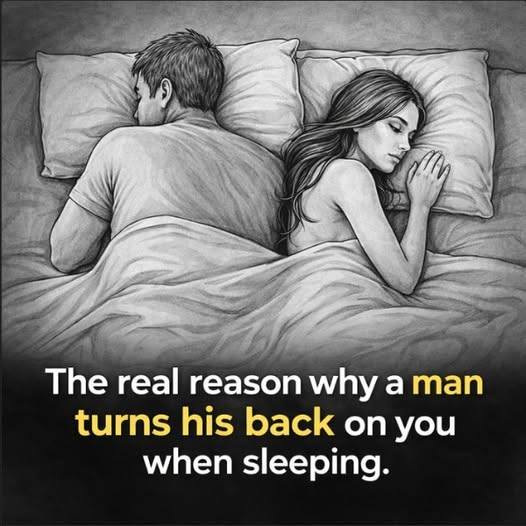
It’s a common moment many couples notice: you go to bed together, and at some point during the night your partner turns their back to you. For some people, this can feel confusing or even emotional—“Are they upset? Do they love me less?”
But before jumping to conclusions, it’s important to understand something simple:
👉 Sleep position is mostly about comfort, not communication.
Let’s look at what science and psychology actually say.
🧠 FIRST: What sleep positions really mean
During sleep, the brain shifts into a restorative state. This means:
- Conscious control decreases
- The body moves for comfort and temperature regulation
- Positions change naturally multiple times during the night
👉 People do NOT consciously choose sleep positions most of the time.
So turning away is usually not intentional.
🛌 1. Comfort and temperature regulation
One of the most common reasons is simple physical comfort.
Your partner may turn away because:
- They are too warm
- They want more airflow
- They are adjusting pressure on their body
- They feel more relaxed in that position
👉 The body naturally seeks the most comfortable posture during deep sleep.
🧠 2. Better sleep quality in that position
Research on sleep behavior shows that many people:
- Move away from stimulation during sleep
- Prefer positions that reduce disturbance
- Sleep more deeply when undisturbed
Turning to one side or facing away can actually help some people sleep more soundly.
💑 3. It is NOT a sign of emotional distance
A very important truth:
👉 Sleep behavior does NOT reflect relationship feelings.
Turning away while sleeping does NOT mean:
- Lack of love
- Emotional rejection
- Relationship problems
It simply reflects unconscious physical comfort.
🧍♂️ 4. Personal sleep habits and personality
Everyone has natural sleep preferences:
- Some people sleep curled up
- Some prefer space
- Some move frequently during the night
These habits are often formed over years and are unrelated to a partner.
😴 5. Body heat and space needs
When two people share a bed:
- Body temperature increases
- Space becomes limited
- Movement becomes more noticeable
So turning away may help:
👉 reduce heat
👉 create personal space
👉 improve comfort without waking up
🧠 6. Stress or fatigue effects