 Skip to content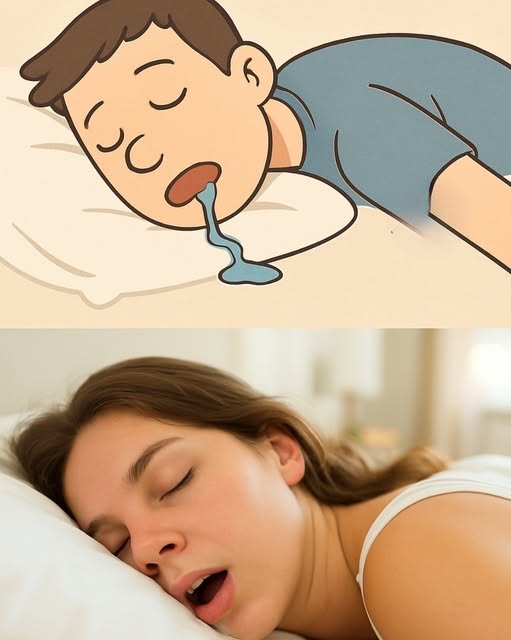
While drooling is usually harmless, in some cases it can indicate an underlying issue—especially if it becomes excessive or new.
You should pay attention if drooling is combined with:
- Loud snoring
- Choking or gasping during sleep
- Constant daytime fatigue
- Frequent waking at night
These may be signs of a condition like Obstructive Sleep Apnea, where breathing repeatedly stops and starts during sleep.
In such cases, drooling is not the main problem—it is a side effect of disrupted breathing and poor sleep quality.
👉 If you suspect this, it’s important to consult a healthcare professional.
🧬 6. Excess Saliva Production
Some people naturally produce more saliva than others, especially during sleep.
This can be influenced by:
- Diet (spicy or acidic foods)
- Hydration levels
- Medications
- Gastrointestinal conditions
More saliva simply increases the chance of drooling, especially when the swallowing reflex is relaxed.
🧘 7. Stress and Sleep Quality
Interestingly, stress can also affect drooling indirectly.
When your sleep is deeper after periods of exhaustion, your body may enter more intense recovery phases. During these phases:
- Muscle relaxation increases
- Sleep becomes deeper
- Drooling may become more noticeable
This is often seen after long, tiring days.
🧠 So… Does Drooling Mean Something Wrong With Your Brain?
In most cases: No. Absolutely not.
Drooling is not a sign of brain damage or malfunction.
Instead, it is usually a normal result of:
- Deep sleep cycles
- Relaxed muscles
- Sleeping position
- Mouth breathing
Your brain is not “failing”—it is actually doing essential maintenance work while you sleep.
🛏️ Simple Ways to Reduce Drooling (If It Bothers You)
If you want to minimize drooling, you can try:
💤 Adjusting your sleeping position
Sleeping slightly on your back may help reduce saliva leakage.
🌬️ Clearing nasal congestion
If allergies or colds are the cause, treating them can help.
🧼 Improving sleep hygiene
Better sleep routines can reduce excessive deep sleep disruptions.
💧 Staying hydrated
Proper hydration can help balance saliva production.
🌟 Final Thoughts
Drooling while sleeping is far more common—and far more normal—than most people realize. In many cases, it simply reflects deep, restorative sleep where your brain and body are fully relaxed.
Only in rare situations, especially when combined with other symptoms, does it point to a condition that needs medical attention.
So instead of worrying, think of it this way:
👉 Your body is resting so deeply that even basic muscle control takes a break.
✨ Sometimes, the most “awkward” sleep habits are just signs that your body is healing, resting, and recharging the way it should.