 Skip to content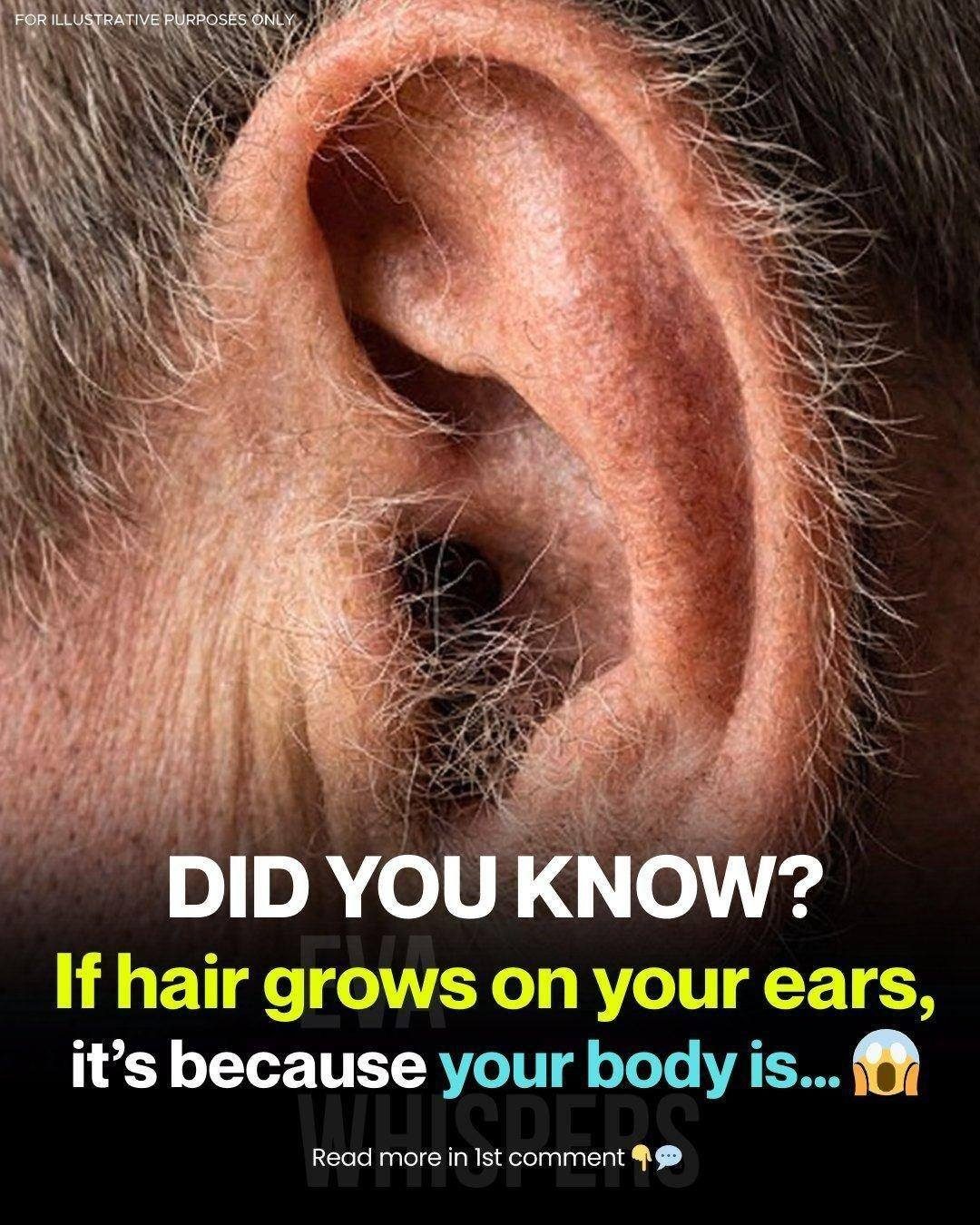
Hormones like testosterone influence hair growth, but their effects are not uniform.
Different body areas respond differently:
- Scalp: may thin with age
- Face: beard hair may increase or become coarser
- Nose and ears: previously minor follicles may become more active
This is why some people notice more hair in unexpected areas even if their overall health is normal.
The important point is:
👉 It is about follicle sensitivity, not “extra hormones” or abnormal levels.
👂 Why some people have more ear hair than others
There is a strong variation between individuals, and it depends on several factors:
🧬 Genetics (the biggest factor)
If family members have noticeable ear hair, you are more likely to develop it too.
🌍 Ethnic and biological variation
Different populations can have different hair distribution patterns.
🧠 Hormonal response differences
Even with similar hormone levels, follicles may react differently from person to person.
⏳ Age progression
Ear hair is more likely to appear or increase with age, but not everyone experiences it the same way.
🧠 Why the internet turns it into a “hidden sign”
Social media often exaggerates simple biological traits because:
- Unusual features attract attention quickly
- People enjoy mystery-based explanations
- Health-related content spreads easily
- Simple biology feels less “interesting” than symbolic meanings
As a result, ear hair is often described online as:
- A “sign of masculinity” 💪
- A “hidden hormone indicator” 🧬
- A “biological upgrade signal” 🔮
But these are interpretations—not medical facts.
The real explanation is far less dramatic but far more accurate.
✂️ Is it normal to remove ear hair?
Yes. Many people choose to trim or remove ear hair for aesthetic reasons.
Common methods include:
- Small grooming trimmers
- Electric detail shavers
- Professional grooming services
This is purely cosmetic. Removing ear hair does not affect health, hormone levels, or body function.
⚠️ When should ear hair be medically checked?