 Skip to content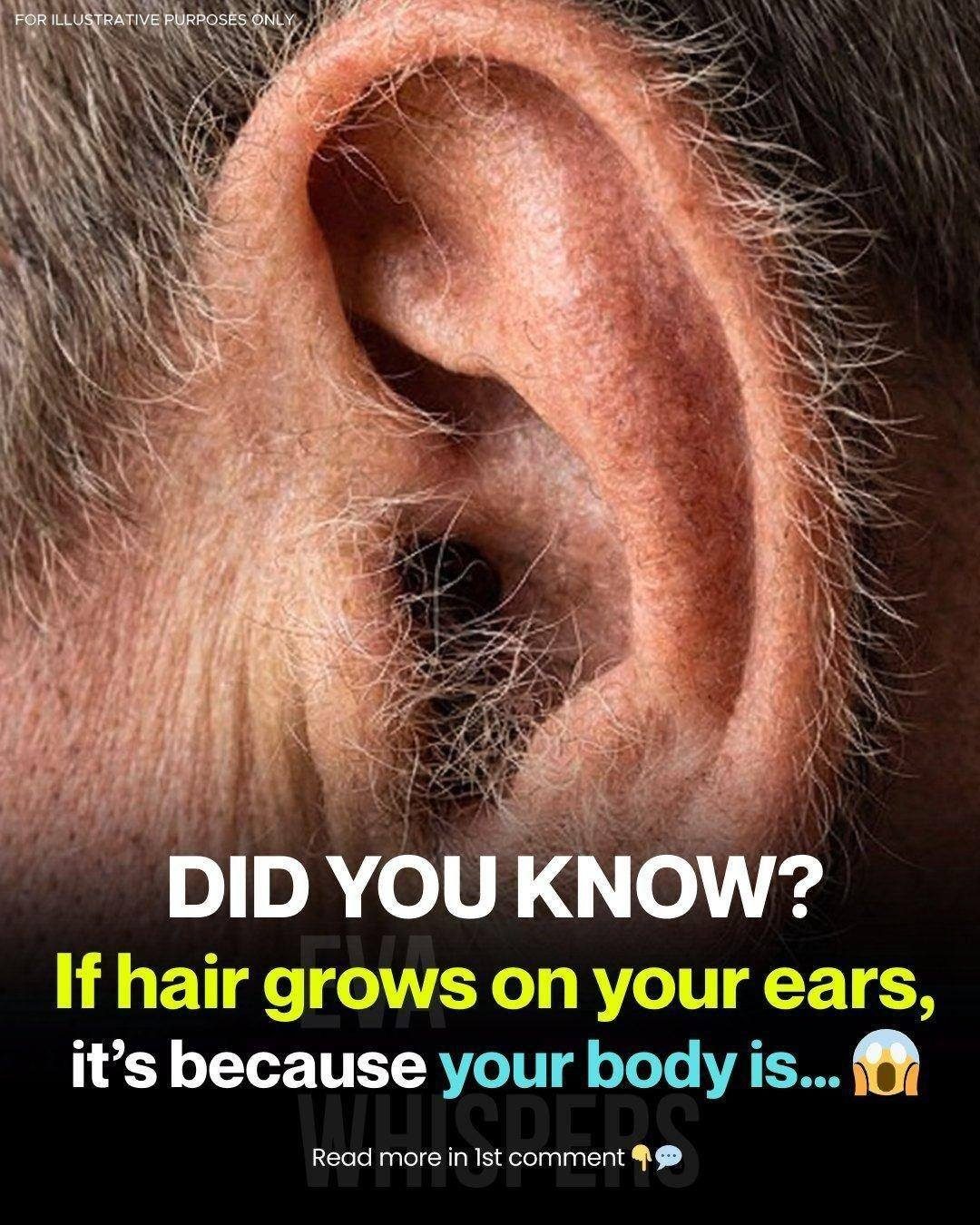
Ear hair is one of those body features that people rarely talk about openly, but many notice at some point in life—especially with age. It can appear suddenly, become more visible over time, or seem thicker in certain individuals. Because it’s not often discussed, it has become the subject of countless internet theories, from “hormone signals” to “hidden health warnings.”
But what does medicine actually say?
The truth is much simpler than online myths: ear hair growth is a normal biological process influenced mainly by genetics, hormones, and aging—not a mysterious message from your body.
Let’s break it down in detail.
🧬 First: what is actually happening when ear hair appears?
Hair growth in and around the ears is controlled by the same system that regulates all body hair: the interaction between hair follicles and hormones, especially androgens like testosterone.
A key concept doctors explain is that hair follicles are not all identical across the body. Some are:
- Highly active (like scalp or beard areas)
- Dormant until later in life (like nose or ear regions)
- Sensitive to hormonal changes
So ear hair doesn’t suddenly “appear from nowhere.” Instead, existing follicles become more active or produce thicker, more visible strands over time.
👴 Why does ear hair become more noticeable with age?
One of the most common patterns is that ear hair becomes more visible in middle age or later adulthood.
This happens because:
🧠 1. Hormonal sensitivity changes
As the body ages, hair follicles may become more sensitive to androgen hormones. Even normal hormone levels can have a stronger effect on certain areas.
🔄 2. Hair growth cycles shift
Hair doesn’t grow continuously. It follows cycles:
- Growth phase
- Resting phase
- Shedding phase
With age, these cycles can change, causing hair in unusual places to remain longer or become more noticeable.
⚖️ 3. Redistribution of visible hair
Aging often brings:
- Thinner scalp hair
- Coarser hair in ears, nose, or eyebrows
This is not random—it is part of how follicles respond differently across the body.
🧠 Does ear hair mean anything about your health?
This is where many online claims become misleading.
You may see statements like:
- “It means high testosterone” 💪
- “It reveals hidden health problems” 🧬
- “It shows biological strength or weakness”
But medically, these interpretations are oversimplified or incorrect.
Doctors emphasize:
👉 Ear hair is NOT a diagnostic sign of disease
👉 It is NOT a reliable hormone measurement
👉 It is NOT a predictor of health or lifespan
In most cases, it is simply a cosmetic and age-related change.
🧬 The real role of hormones (explained simply)