 Skip to content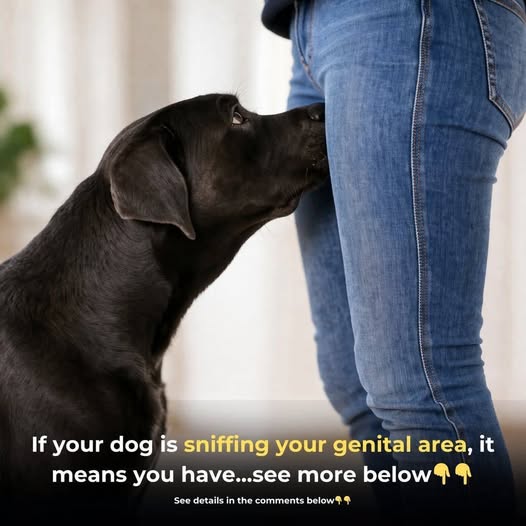
Dogs may also sniff humans in the same area because:
- It contains unique scent glands
- It provides strong chemical signals
- It is easily accessible when greeting
From a dog’s perspective, it is simply:
👉 gathering information, not being inappropriate
However, training is important to manage behavior in social settings.
🧠 Why humans misunderstand this behavior
Humans rely on visual communication and social norms.
So dog behavior can feel:
- Awkward
- Strange
- Or inappropriate
But in the dog world, there is no concept of embarrassment in scent-based communication. It is purely informational.
🛠️ Can this behavior be controlled?
Yes, but not completely eliminated.
Training can help dogs:
- Learn polite greeting alternatives
- Respond to commands like “sit” or “leave it”
- Reduce excessive sniffing in social situations
However, sniffing is a natural instinct, so it cannot be fully removed.
🐾 Healthy dog social behavior vs. problem behavior
✔️ Normal:
- Brief sniffing during greeting
- Calm interaction afterward
- Mutual behavior between dogs
⚠️ May need training:
- Excessive persistence
- Ignoring boundaries from other dogs or people
- Stress or excitement-driven behavior
🌿 Final thoughts
When dogs sniff the genital area of other dogs or humans, it is not rude, sexual, or aggressive. It is simply their natural way of:
- Gathering information
- Recognizing identity
- Communicating socially
In the canine world, smell is the equivalent of conversation.
So what may seem strange to us is actually:
👉 a normal, instinctive, and highly informative form of communication
Understanding this helps us better interpret dog behavior and build a healthier relationship with them. 🐶✨