 Skip to content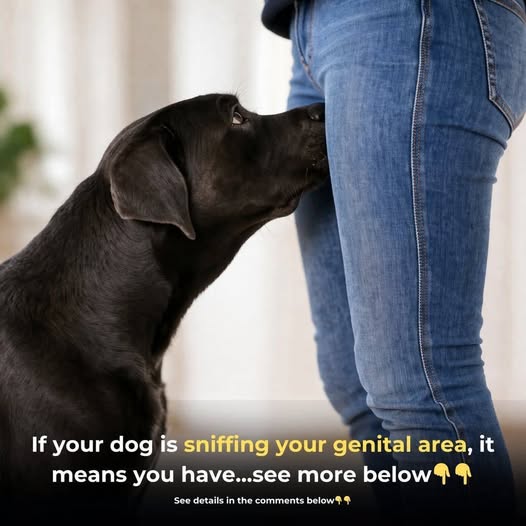
If you’ve ever been around dogs, you’ve probably seen it: one dog approaches another and immediately sniffs the tail or genital area. For humans, this can feel awkward or even confusing. But for dogs, it’s one of the most natural and important forms of communication.
So what does it actually mean when dogs do this? Is it rude? Aggressive? Or just curiosity?
Let’s break it down in a clear, science-based way.
🧠 FIRST: Dogs “see” the world through smell
Dogs experience the world very differently from humans.
While humans rely mostly on vision, dogs rely heavily on their sense of smell. In fact:
- A dog’s sense of smell is thousands of times stronger than a human’s
- They can detect chemical signals we cannot perceive at all
- Smell is their main tool for understanding other animals
So when a dog sniffs another dog, it is essentially:
👉 “reading information” about them
🧪 1. They are collecting identity information
The genital and tail area contains special scent glands that release chemical signals called pheromones.
These signals can tell a dog:
- Age
- Sex
- Health status
- Emotional state
- Reproductive status
To a dog, this is like reading a detailed personal profile.
So what looks strange to humans is actually:
👉 a very detailed form of identification
🧠 2. It is how dogs “introduce themselves”
Sniffing is a normal greeting behavior in dogs.
Instead of saying “hello” with words, dogs use smell to:
- Recognize each other
- Gather information
- Establish social understanding
It is similar to humans shaking hands or exchanging names.
For dogs, sniffing is:
👉 polite communication, not disrespect
⚖️ 3. It helps establish social hierarchy
Dogs live in social structures where understanding status is important.
Through sniffing, they can gather clues about:
- Confidence level
- Age and maturity
- Social signals from scent
This helps them decide how to behave around each other:
- Friendly interaction
- Play behavior
- Or respectful distance
It is part of their natural social system.
🧬 4. They detect health and biological changes
A dog’s sense of smell is so powerful that they may detect subtle changes in:
- Hormones
- Stress levels
- Illness-related chemical changes
This is why some trained dogs can even detect medical conditions in humans.
So when dogs sniff another dog, they may be picking up:
👉 health-related information without realizing it consciously
🐕 5. It is instinctive behavior, not learned
This behavior is not taught by humans or other dogs—it is instinctive.
Even puppies:
- Start sniffing early in life
- Learn social information through scent
- Use smell as their primary communication tool
It is built into their biology.
🚶♂️ What about dogs sniffing humans?