 Skip to content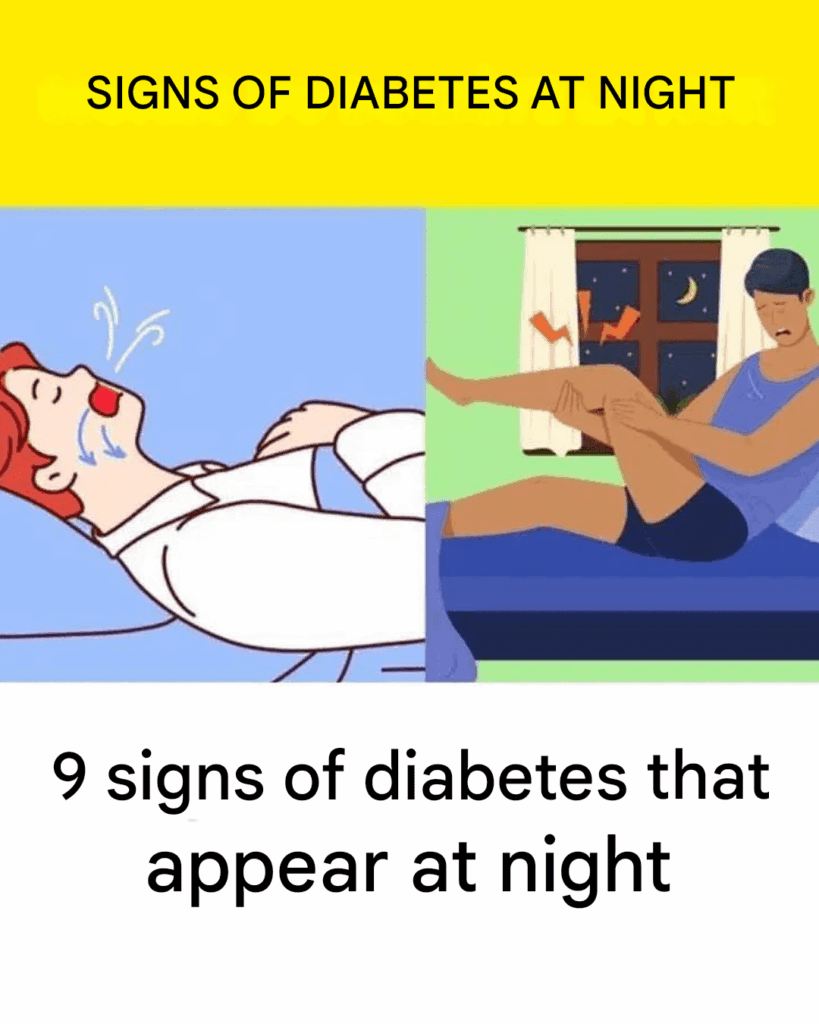
Diabetes is often called a “silent condition” because many of its early warning signs develop gradually—and some of the most important clues appear at night while you are sleeping or trying to rest.
Nighttime symptoms can be especially important because they often disrupt sleep and reflect how your body is handling blood sugar levels when you are not eating.
Here are 9 possible night-related signs that may be linked to diabetes or blood sugar imbalance.
🧠 1. Waking up frequently to urinate
One of the most common night symptoms is nocturia (frequent nighttime urination).
This happens because:
- High blood sugar forces the kidneys to remove excess glucose
- This pulls more water into urine
- The bladder fills faster during the night
👉 Result: multiple trips to the bathroom during sleep.
💧 2. Excessive thirst at night
People may wake up feeling:
- Very dry mouth
- Strong thirst
- Need to drink water repeatedly
This is the body’s response to dehydration caused by increased urination.
😴 3. Night sweats or sweating episodes
Some people with blood sugar fluctuations experience:
- Sudden sweating during sleep
- Waking up feeling damp or uncomfortable
This can happen when blood sugar drops too low overnight.
🧠 4. Nighttime hypoglycemia (low blood sugar symptoms)
Low blood sugar at night may cause:
- Restlessness
- Nightmares or vivid dreams
- Sudden awakening with anxiety
- Shakiness or fast heartbeat
👉 This is more common in people already diagnosed with diabetes or on medication.
🦵 5. Leg cramps or muscle discomfort
Blood sugar imbalance can affect nerves and circulation, leading to:
- Cramping in legs or feet
- Tingling sensations
- Restless feeling in limbs
These symptoms often become more noticeable at night.
😵 6. Difficulty staying asleep
People with diabetes or prediabetes may experience:
- Frequent awakenings
- Light, broken sleep
- Trouble falling back asleep
This is linked to blood sugar instability and hormonal changes.
🧠 7. Nighttime fatigue despite sleep
Even after sleeping for hours, some people wake up feeling:
- Tired
- Unrefreshed
- Low energy in the morning
👉 This can be a sign that blood sugar levels are affecting sleep quality.
🍬 8. Hunger attacks at night
Some individuals experience:
- Sudden hunger during sleep
- Waking up needing to eat
- Cravings for sugary foods
This may be linked to blood sugar drops overnight.
🫀 9. Rapid heartbeat or restlessness at night
Blood sugar fluctuations can activate stress hormones, leading to:
- Fast heartbeat
- Anxiety-like feelings
- Difficulty relaxing
This often disturbs deep sleep cycles.
⚠️ Important reality check