 Skip to content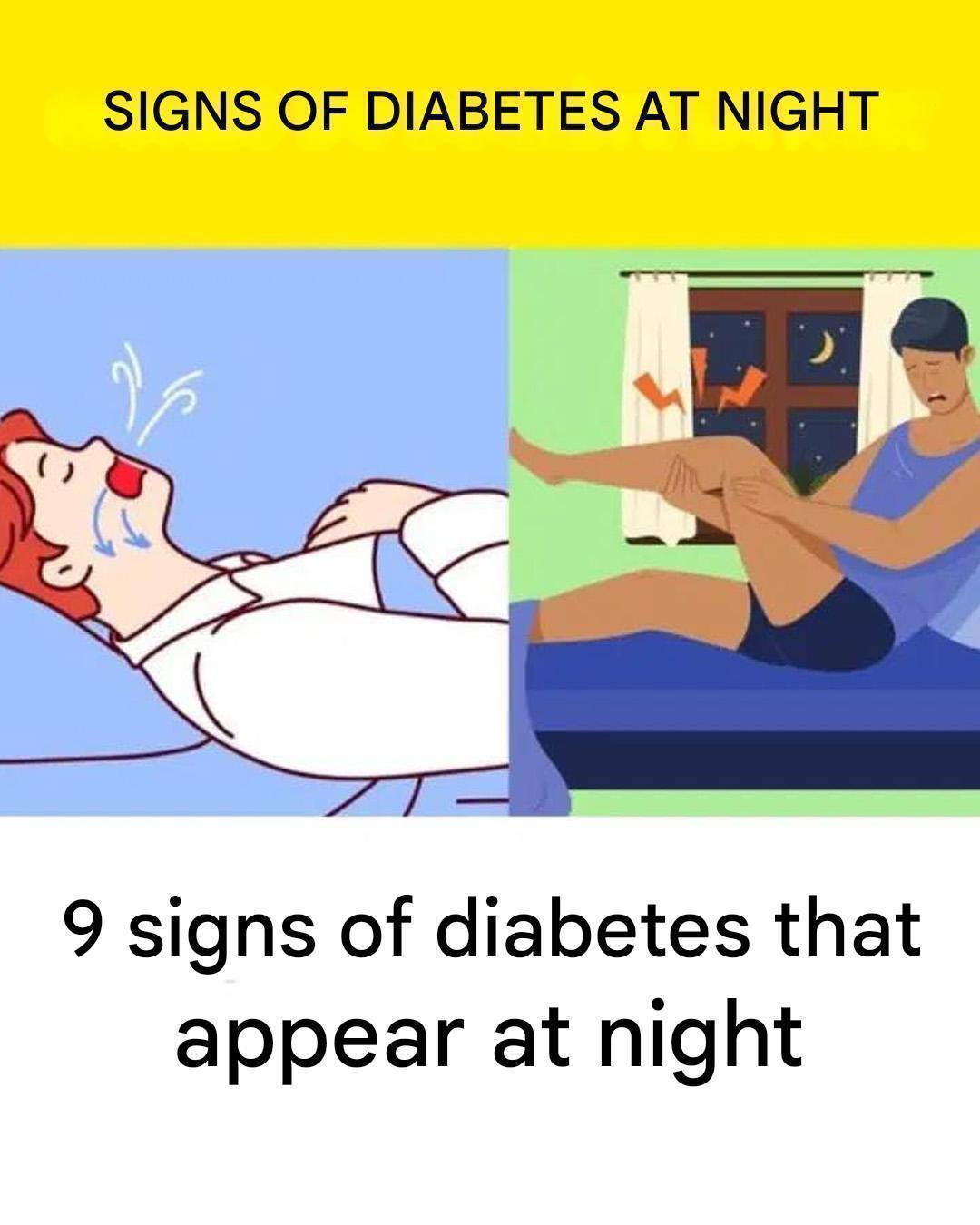
9 Signs of Diabetes That Appear at Night
Diabetes is often thought of as a condition that shows clear daytime symptoms, but in reality, many early warning signs appear quietly at night when the body is at rest. These nighttime symptoms are frequently overlooked because people assume they are caused by stress, poor sleep, or aging.
However, recognizing these subtle signs early can make a major difference in managing blood sugar levels and preventing complications. Diabetes affects how the body uses glucose (sugar), and when blood sugar becomes unstable, the effects are often more noticeable during sleep.
Here are 9 important nighttime signs of diabetes that should never be ignored.
1. Frequent Nighttime Urination (Nocturia)
One of the earliest and most common signs is waking up multiple times during the night to urinate.
When blood sugar levels are high, the kidneys work harder to remove excess glucose through urine. This increases urine production, even while sleeping. As a result, a person may wake up two, three, or even more times per night.
Over time, this disrupts sleep quality and can lead to fatigue during the day.
2. Excessive Night Thirst
Frequent urination often leads to dehydration, which triggers intense thirst during the night.
People with undiagnosed diabetes may wake up feeling extremely dry-mouthed or needing to drink large amounts of water before they can fall back asleep.
This cycle of thirst and urination is one of the strongest warning patterns linked to high blood sugar levels.
3. Night Sweats
Sudden sweating at night can be another warning sign of unstable blood sugar levels.
When glucose levels drop too low during sleep (a condition known as nocturnal hypoglycemia), the body releases stress hormones like adrenaline to raise blood sugar. This reaction can cause:
- Excessive sweating
- Damp sheets or pajamas
- Sudden waking from sleep
Although night sweats can have many causes, repeated episodes should be checked carefully.
4. Nighttime Hunger or Cravings
Waking up hungry during the night or experiencing strong cravings for sugary foods may indicate blood sugar imbalance.
When the body cannot properly use glucose for energy, the brain signals hunger even if you have eaten enough during the day. This is especially common in people with fluctuating or poorly controlled blood sugar.
5. Restless Sleep or Insomnia
Many people with diabetes experience difficulty staying asleep or frequent nighttime awakenings.
High or low blood sugar levels can disrupt the body’s natural sleep cycle. Instead of deep, restful sleep, the body stays in a light and interrupted sleep state.
This may result in:
- Difficulty falling asleep
- Waking up frequently
- Feeling unrefreshed in the morning
6. Tingling or Burning Sensation in Feet and Hands