 Skip to content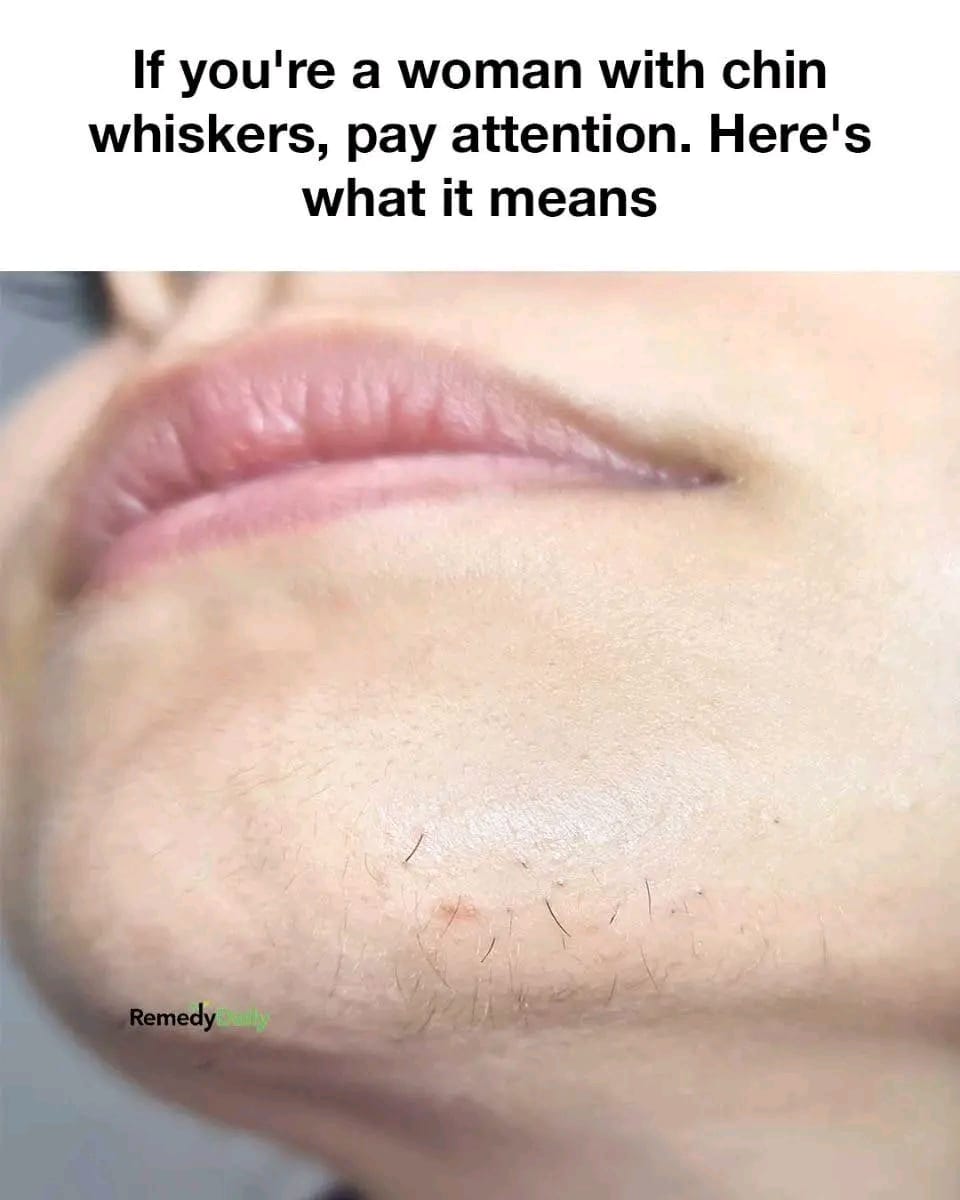
Chin hairs alone are usually harmless. But you should consider speaking to a doctor if you notice:
- Sudden increase in facial or body hair
- Irregular menstrual cycles
- Severe acne
- Hair thinning on the scalp
- Rapid hormonal changes
These symptoms together may indicate an underlying hormonal imbalance.
🧠 What Chin Hairs DO NOT Mean
Let’s clear up common myths:
❌ They do NOT mean infertility
❌ They do NOT mean a serious disease automatically
❌ They do NOT mean “masculinization”
❌ They do NOT define femininity or beauty
A few stray hairs are a normal biological variation.
✂️ Safe Ways to Manage Chin Hairs
If you prefer to remove or reduce them, there are many safe options:
✔️ 1. Tweezing
Simple and effective for a few hairs.
✔️ 2. Threading or waxing
Removes hair from the root for longer-lasting results.
✔️ 3. Laser hair removal
Reduces long-term growth over multiple sessions.
✔️ 4. Depilatory creams
Chemically dissolve hair (test skin sensitivity first).
🥗 Lifestyle and Hormones
While you cannot fully control genetics, lifestyle can support hormonal balance:
- Balanced diet
- Regular exercise
- Managing stress
- Maintaining healthy weight
These habits are especially helpful in conditions like Polycystic ovary syndrome, when present.
🌟 The Emotional Side Matters Too
Many women feel self-conscious about facial hair due to beauty standards. But medically speaking:
👉 Hair patterns vary widely between individuals and ethnic groups
👉 A few chin hairs are extremely common
👉 It does not affect health or femininity
💬 The Bottom Line
Chin whiskers in women are usually caused by normal hormonal activity, aging, or genetics. In some cases, they may be linked to conditions like Polycystic ovary syndrome, but this is not always the case.
💖 Final Thought
Your body is not “wrong” for having a few stray hairs.
Because biology is not about perfection—it’s about variation.
👉 And most of the time, chin whiskers are just a normal part of that variation, nothing more 🌿