 Skip to content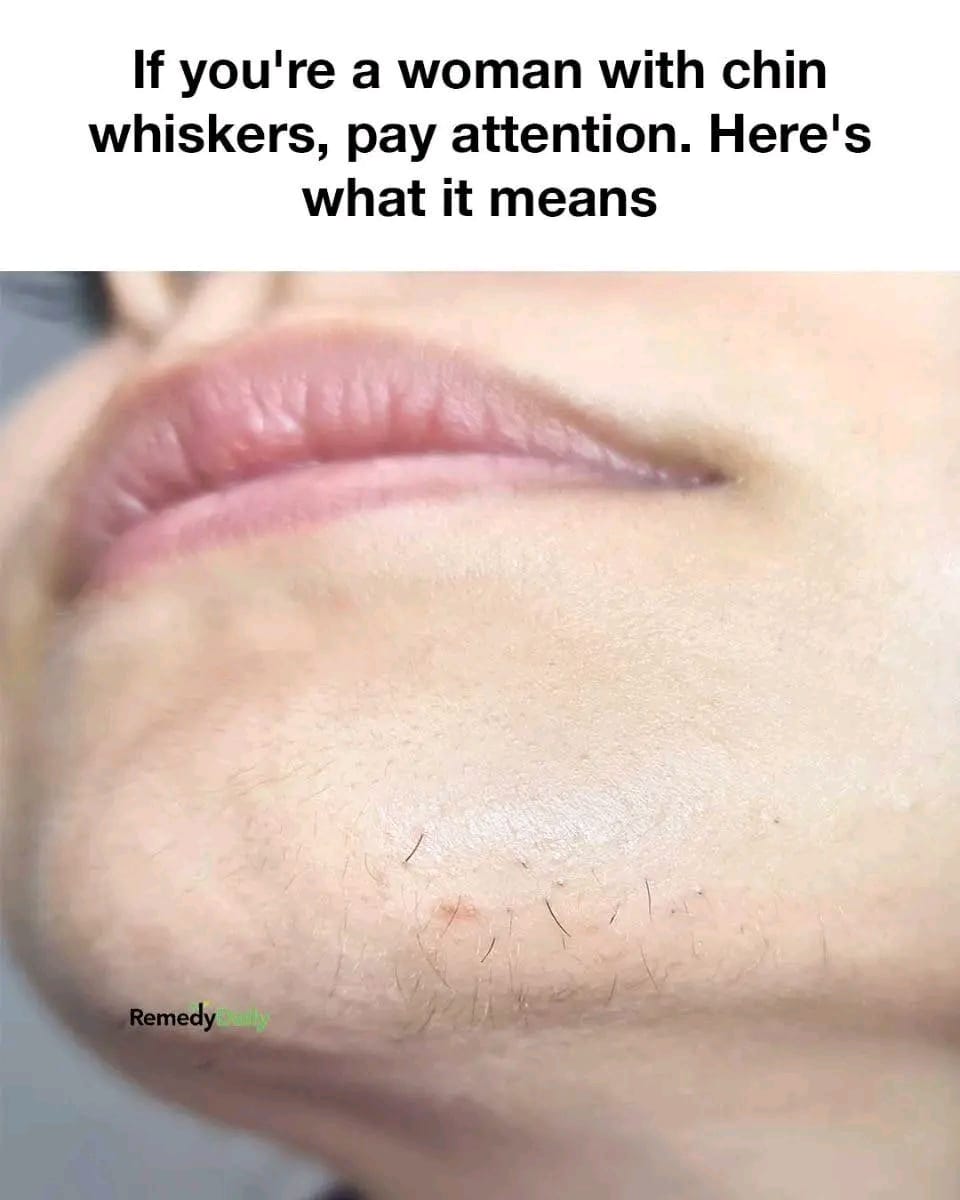
Noticing a few coarse hairs on the chin can feel surprising or even worrying for many women. Social media often turns this into dramatic claims about hormones or hidden diseases—but the reality is usually more balanced and far less alarming.
Let’s break it down in a clear, science-based way so you understand what’s normal, what’s not, and when to pay attention.
🧠 First: What Are Chin Whiskers?
Chin whiskers are coarse, darker hairs that appear on the chin or jawline in women. Medically, this is a form of mild hirsutism, which simply means increased hair growth in areas where men typically grow thicker hair.
A related condition is Hirsutism.
Important point:
👉 A few chin hairs does NOT automatically mean disease.
🧬 Why Do Chin Hairs Appear?
There are several possible reasons, and most are completely normal.
🧬 1. Hormonal sensitivity (most common)
Hair follicles are sensitive to hormones called androgens (present in both men and women).
Even normal hormone levels can sometimes cause:
- A few chin hairs
- Thicker facial hair in certain spots
- Changes with age
This is very common, especially after 30–40 years of age.
🧠 2. Natural aging changes
As women age, estrogen levels may gradually decrease. This can slightly shift the balance between estrogen and androgens, making facial hair more noticeable.
👉 This is a normal part of aging, not a disease.
🩺 3. Genetics
Family history plays a big role.
If your mother or grandmother had similar hair growth patterns, you are more likely to experience it too.
⚖️ 4. Hormonal conditions (less common)
In some cases, chin whiskers may be linked to conditions such as:
- Polycystic ovary syndrome (PCOS)
- Hormonal imbalance
- Insulin resistance
One commonly discussed condition is Polycystic ovary syndrome.
However:
👉 These conditions usually come with other symptoms—not just a few chin hairs.
⚠️ When Should You Be Concerned?