 Skip to content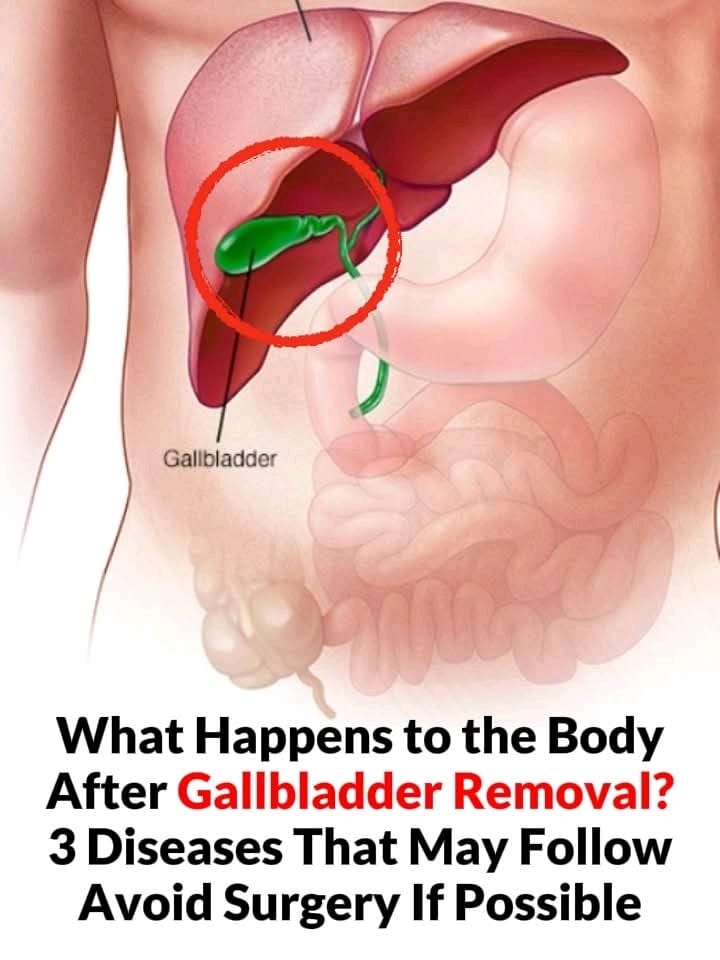
This statement is commonly seen online, but it is not medically accurate.
✔️ REALITY:
Gallbladder surgery is recommended only when necessary, such as:
- Recurrent gallstone pain
- Infection or inflammation
- Risk of serious complications
⚠️ RISKS OF NOT TREATING GALLBLADDER PROBLEMS:
If gallbladder disease is ignored, it may lead to:
- Severe abdominal pain attacks
- Infection (cholecystitis)
- Blockage of bile ducts
- Pancreatitis (inflammation of the pancreas)
👉 In many cases, surgery prevents more serious health risks later.
🥗 HOW TO SUPPORT YOUR BODY AFTER REMOVAL
Recovery is often smoother when patients follow simple lifestyle habits:
🍽️ 1. Eat smaller meals
Reduces pressure on the digestive system.
🥑 2. Limit heavy, greasy foods initially
Helps avoid discomfort during adjustment phase.
💧 3. Stay hydrated
Supports digestion and overall metabolism.
🚶 4. Light physical activity
Helps the digestive system function more efficiently.
🧠 5. Gradual food reintroduction
Most people can slowly return to normal eating habits over time.
🏥 WHEN MEDICAL FOLLOW-UP IS IMPORTANT
After surgery, you should consult a doctor if you experience:
- Persistent severe diarrhea
- Ongoing abdominal pain
- Fever or signs of infection
- Difficulty eating for long periods
These are not common but should be evaluated.
🌟 FINAL THOUGHTS
Gallbladder removal is a well-established, safe surgical procedure that helps millions of people each year live without pain or recurring digestive attacks. While the body does adjust afterward, most changes are temporary and manageable.
The idea that surgery should always be avoided is not supported by medical evidence. In fact, untreated gallbladder disease can create more serious complications than the surgery itself.
The most important takeaway is this:
👉 The human body is adaptable—it can function normally without a gallbladder by adjusting how bile is used in digestion.
With proper care, balanced eating habits, and time, most people return to a healthy and comfortable life after surgery.