 Skip to content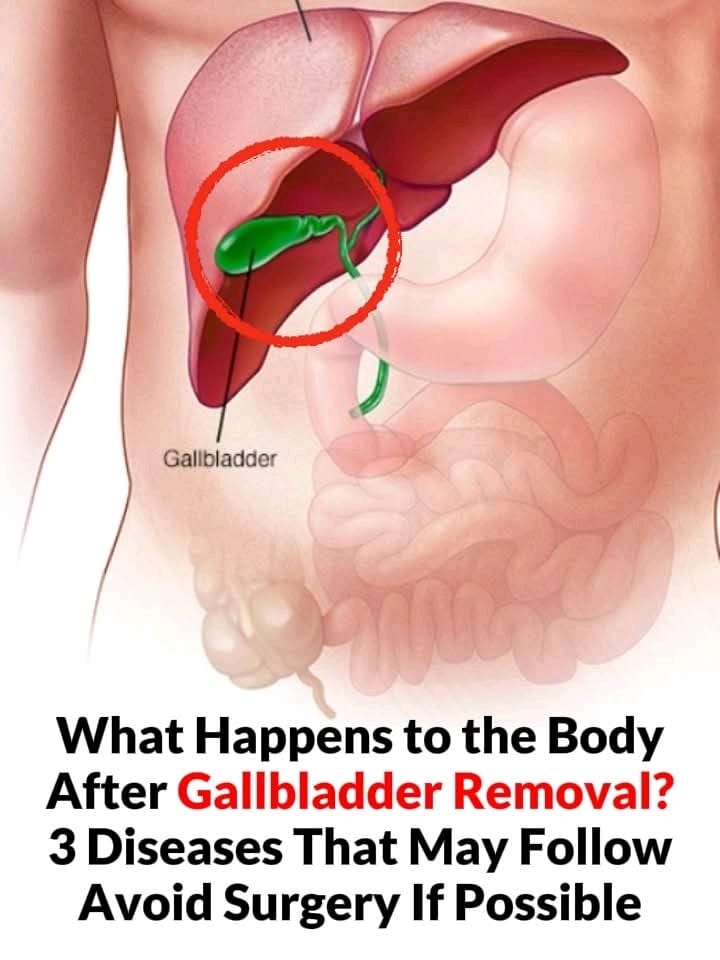
Gallbladder removal surgery, known medically as cholecystectomy, is one of the most frequently performed operations worldwide. It is usually recommended for people suffering from painful gallstones, repeated inflammation, or bile duct blockage that affects digestion and quality of life.
Online, however, this topic is often surrounded by fear-based statements like “avoid surgery if possible” or “it causes diseases.” These claims can be misleading. The medical reality is more balanced: most people live completely normal lives after gallbladder removal, but the body does undergo some adjustments as it adapts to a new way of digesting fats.
To understand this properly, we need to look at what the gallbladder actually does, how the body changes after removal, and what symptoms may appear in some people.
🧠 FIRST: WHAT THE GALLBLADDER REALLY DOES
The gallbladder is a small, pear-shaped organ located under the liver. Its main function is not to produce bile, but to:
- Store bile produced by the liver
- Concentrate bile to make it stronger
- Release bile in controlled amounts when you eat fatty foods
Bile plays an important role in digestion, especially in breaking down fats into smaller particles so the body can absorb nutrients efficiently.
👉 Important fact: The gallbladder is helpful, but it is not essential for survival.
When it is removed, the liver continues to produce bile. The only difference is that bile no longer gets stored—it flows continuously into the intestines.
⚖️ HOW THE BODY ADAPTS AFTER SURGERY
After gallbladder removal, the digestive system does not stop working. Instead, it adjusts to a new pattern:
- Bile flows directly from the liver to the intestine
- There is no “storage system” for large releases of bile
- Fat digestion becomes more gradual instead of controlled bursts
For many people, this adjustment happens smoothly within weeks or months. However, some individuals experience temporary or longer-lasting digestive changes.
These changes are not “new diseases” in most cases—they are adaptations.
🧩 1. DIGESTIVE CHANGES (THE MOST COMMON EFFECT)
The most frequently reported change after gallbladder removal is related to digestion.
Some people may experience:
- Bloating after eating
- Gas or abdominal discomfort
- Loose stools or mild diarrhea
- Sensitivity to greasy or fried foods
🧠 WHY THIS HAPPENS
Without the gallbladder, bile is no longer released in concentrated amounts. Instead, it drips continuously into the intestine.
This can sometimes make:
- Fat digestion less efficient at first
- The intestines more sensitive to fatty meals
- Stool consistency temporarily change
💡 IMPORTANT REALITY
For most patients, the digestive system gradually adapts. Over time:
- Symptoms often reduce
- Food tolerance improves
- Normal eating becomes possible again
Dietary adjustments in the early months usually make a big difference.
🧬 2. BILE FLOW IRRITATION OR POST-SURGERY SENSITIVITY (LESS COMMON)
In a smaller group of people, bile flow may irritate the digestive tract.
Possible symptoms include:
- Mild upper abdominal discomfort
- Nausea after fatty meals
- Occasional stomach burning sensation
- Irregular digestion patterns
🧠 WHAT IS HAPPENING
Since bile is no longer stored and released in controlled amounts, it may enter the intestines more continuously than before. In some sensitive individuals, this can cause temporary irritation.
⚖️ MEDICAL PERSPECTIVE
This is not considered a disease in most cases. It is usually:
- Temporary
- Manageable with diet changes
- Treatable if needed with medication prescribed by a doctor
⚖️ 3. LONG-TERM DIETARY SENSITIVITY (ADAPTATION PHASE)
Some individuals notice that their body becomes more sensitive to certain foods after surgery.
This may include:
- Difficulty digesting very fatty meals
- Preference for smaller, more frequent meals
- Changes in appetite patterns
🧠 WHY THIS OCCURS
The digestive system learns to operate without a bile storage organ, which can change how quickly fats are processed.
💡 GOOD NEWS
In many cases:
- The body adapts over time
- Food tolerance improves gradually
- People return to a near-normal diet
Only a small percentage experience long-term dietary restrictions.
⚠️ IMPORTANT MYTH: “AVOID SURGERY AT ALL COSTS”