 Skip to content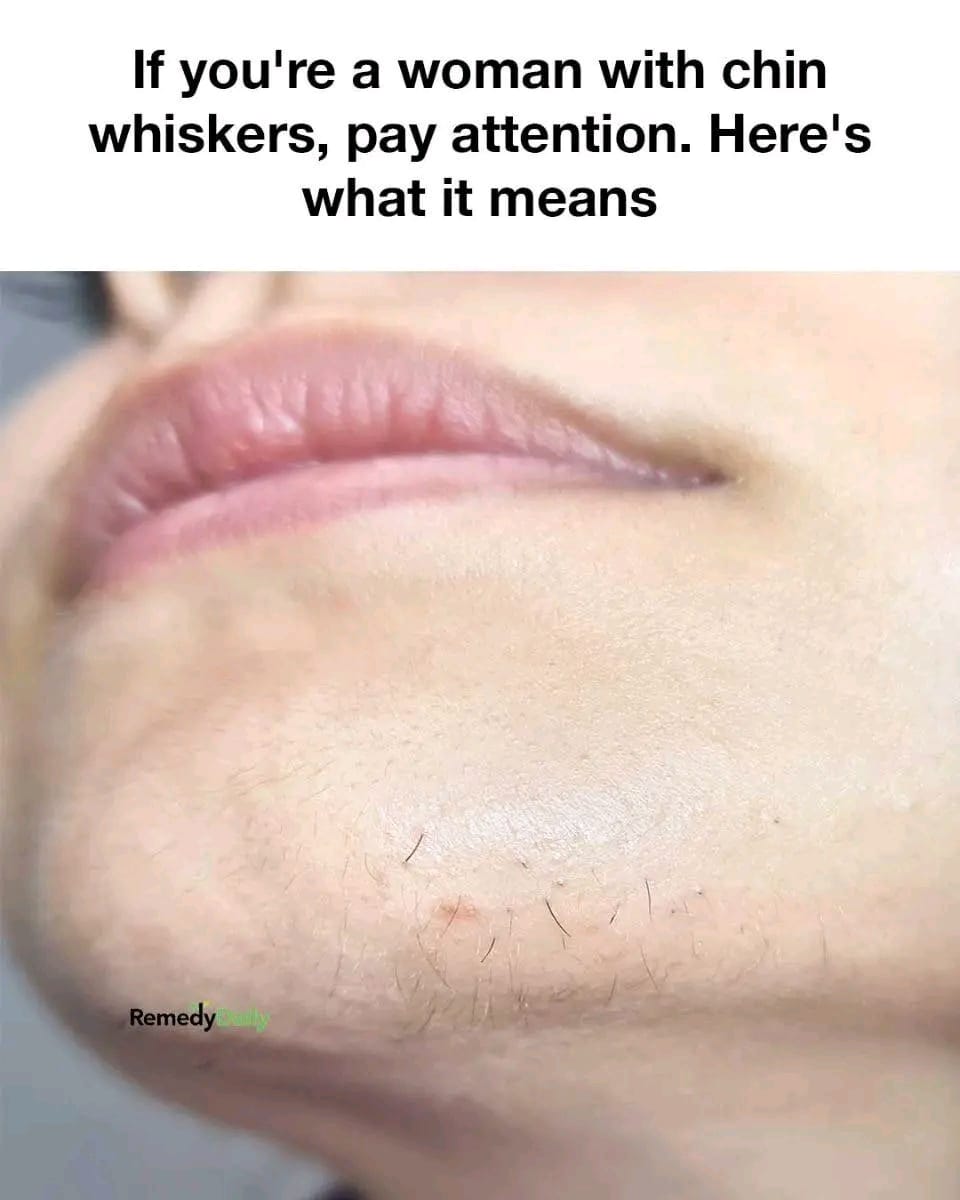
Noticing a few chin whiskers can be surprising or even frustrating, especially when they appear suddenly or become more visible over time. While facial hair is completely normal for both men and women, changes in hair growth patterns on the chin can sometimes reflect shifts inside the body.
In most cases, chin whiskers are harmless and related to natural hormones. However, in some situations, they can give clues about hormonal balance, aging, or health conditions.
Let’s break it down in a clear and realistic way.
🧬 1. HORMONAL CHANGES (THE MOST COMMON REASON)
The most frequent cause of chin whiskers in women is androgen hormones (often called “male hormones,” but present in all humans).
🧠 What happens:
- Small amounts of androgens stimulate hair follicles
- Some follicles on the chin become more active over time
- Hair becomes thicker or darker in certain areas
📊 When it’s common:
- During aging
- Around menopause
- During natural hormonal fluctuations
👉 This is usually normal and not a sign of illness.
🌙 2. AGE-RELATED CHANGES
As we age, hormone levels naturally shift.
👵 Common changes include:
- Lower estrogen levels
- Slight increase in androgen activity
- Changes in hair distribution
👉 This is why chin hairs may become more noticeable in middle age or later years.
It is a natural part of the body’s aging process, not necessarily a medical problem.
⚖️ 3. HORMONAL IMBALANCE (WHEN HAIR GROWTH INCREASES SUDDENLY)
In some cases, more noticeable or sudden growth of chin hair may be linked to hormonal imbalance.
Possible causes include:
- Polycystic ovary syndrome (PCOS)
- Thyroid disorders
- Stress-related hormone changes
- Certain medications
🧠 Possible signs alongside hair changes:
- Irregular menstrual cycles
- Acne or oily skin
- Weight changes
👉 If chin hair appears suddenly and increases rapidly, it may be worth medical evaluation.
🧠 4. GENETICS (FAMILY TRAIT)
Sometimes, chin whiskers are simply inherited.
👨👩👧 Family history may show:
- Similar facial hair patterns
- Early or mild hair growth in women
- No underlying health issue
👉 Genetics plays a major role in hair growth patterns and is completely normal.
💊 5. MEDICATION OR LIFESTYLE FACTORS
Certain factors can influence hair growth:
- Hormonal medications
- Steroid use
- Chronic stress
- Changes in weight or metabolism
👉 These factors can subtly affect hormone balance and hair follicles.
⚠️ WHEN CHIN WHISKERS MAY NEED ATTENTION