 Skip to content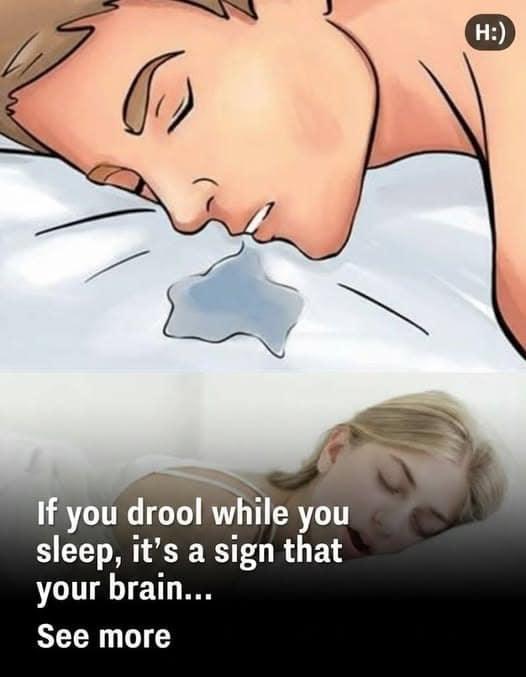
Waking up with drool on your pillow might feel a little awkward, but it’s actually one of the most common sleep experiences. Many people assume it’s “strange” or even a sign of something wrong, but in reality, it usually reflects something very normal happening inside your body and brain during sleep.
Still, the viral claim often says: “If you drool in your sleep, your brain is…” — implying something mysterious or alarming. The truth is far more grounded in biology than mystery.
Let’s explore what’s really going on inside your body when this happens.
🧠 First: Your brain is not “sending a message”—it’s switching modes
When you fall asleep, your brain doesn’t simply shut off. Instead, it transitions through different stages of activity:
- Light sleep
- Deep sleep
- REM sleep (dreaming stage)
During deeper sleep stages, your brain reduces conscious control over many automatic functions. This includes facial muscle tone, swallowing frequency, and awareness of saliva buildup.
So rather than “sending a message,” your brain is simply shifting into a restoration and repair mode.
This is actually a good thing.
😴 Why drooling happens in simple terms
Drooling occurs when saliva escapes your mouth instead of being swallowed. During sleep, three main things make this more likely:
- Relaxed jaw and facial muscles
- Reduced swallowing reflex
- Open mouth during sleep
When these combine, gravity takes over—and saliva naturally leaks out.
So the real explanation is mechanical and physiological, not symbolic or mysterious.
🛌 Sleep position is one of the biggest factors
Your sleeping posture plays a major role in whether you drool or not.
- Side sleeping → increases drooling (most common position)
- Stomach sleeping → increases drooling even more
- Back sleeping → reduces drooling for many people
When your face is tilted downward or sideways, saliva naturally flows out more easily.
So sometimes, the “cause” is simply how you’re lying down—not your brain at all.
🌬️ Mouth breathing makes it more likely
Another major factor is breathing through your mouth instead of your nose.
This can happen because of:
- Nasal congestion from colds or allergies
- Habitual mouth breathing
- Deviated nasal structure in some individuals
- Dry air or sleep environment
When your mouth is open for breathing, saliva is no longer being swallowed regularly, increasing the chance of drooling.
🧬 What your nervous system is doing during sleep
During sleep—especially deep sleep—your nervous system shifts into a “parasympathetic” state. This is often called the rest-and-repair mode.
In this state:
- Heart rate slows
- Breathing becomes deeper and more regular
- Muscles fully relax
- Digestive and repair processes increase
Your body prioritizes healing and recovery over conscious control. Drooling is simply a side effect of this deep relaxation.
💤 Is it a sign of good sleep?
In many cases, yes.
Mild drooling can actually suggest that:
- You are reaching deeper sleep stages
- Your muscles are fully relaxed
- Your body is not tense or alert
Deep sleep is essential for:
- Memory consolidation
- Immune system strength
- Hormone regulation
- Mental recovery
So in a strange way, drooling can be associated with quality rest, not poor health.
⚠️ When drooling might need attention