 Skip to content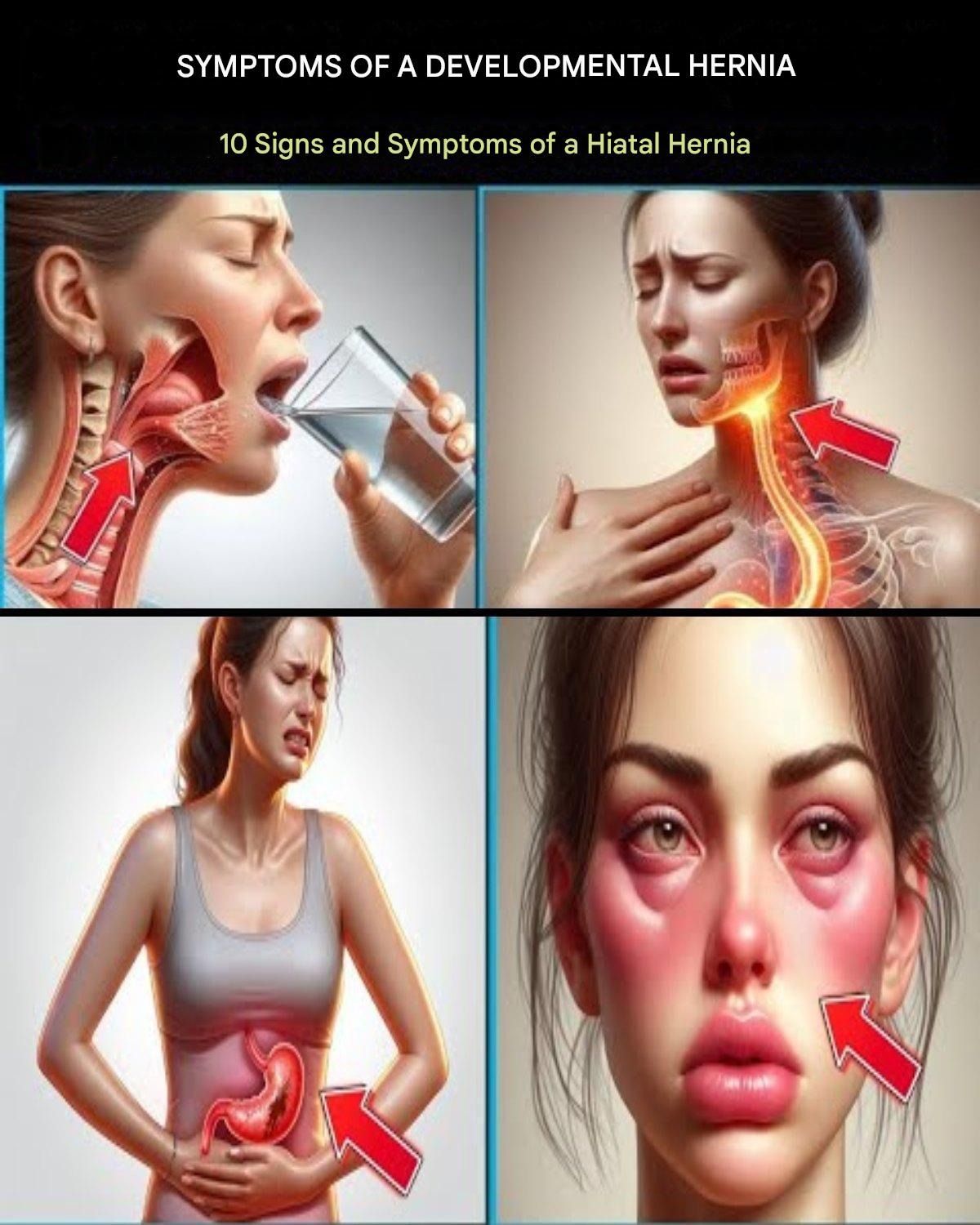
Many people live for years with stomach discomfort, acid reflux, or chest pain without realizing there may be an underlying cause. One of the most overlooked conditions behind these symptoms is a Hiatal hernia.
It sounds complicated, but the concept is simple: part of the stomach pushes upward through the diaphragm into the chest area. This can interfere with digestion and trigger a wide range of symptoms that often get mistaken for stress, overeating, or simple indigestion.
The problem is not just the condition itself—but how easily it goes unnoticed.
Let’s explore the 10 most important symptoms in detail so you can better understand what your body might be telling you.
🔥 1. Persistent Heartburn (The Most Common Sign)
Heartburn is often the first and most recognizable symptom.
It feels like a burning sensation in the chest, usually after eating or when lying down. This happens because stomach acid flows upward into the esophagus more easily when the stomach is displaced.
People often confuse it with spicy food sensitivity or stress, but when it becomes frequent, it may point to a deeper issue like a hiatal hernia.
🤢 2. Acid Reflux That Keeps Coming Back
A closely related symptom is chronic acid reflux.
You may experience:
- Sour or bitter taste in your mouth
- Burning sensation in the throat
- Regurgitation of food or liquid
This is commonly associated with Gastroesophageal reflux disease, which often occurs alongside a hiatal hernia.
When the stomach is pushed upward, the valve that prevents acid from rising becomes weaker or misaligned.
😣 3. Chest Pain That Feels Concerning
Chest pain caused by a hiatal hernia can be sharp, tight, or pressure-like.
Because of its location, many people worry it’s heart-related. While it’s not always dangerous, it should never be ignored without proper medical evaluation.
This pain often worsens after meals or when bending over.
🍽️ 4. Difficulty Swallowing (Dysphagia)
Some people experience a sensation that food is stuck in the throat or chest.
This happens when pressure from the hernia affects the normal movement of food through the esophagus. It may start mildly but can become more noticeable over time.
If swallowing becomes consistently uncomfortable, it’s an important warning sign.
🌬️ 5. Shortness of Breath After Eating