 Skip to content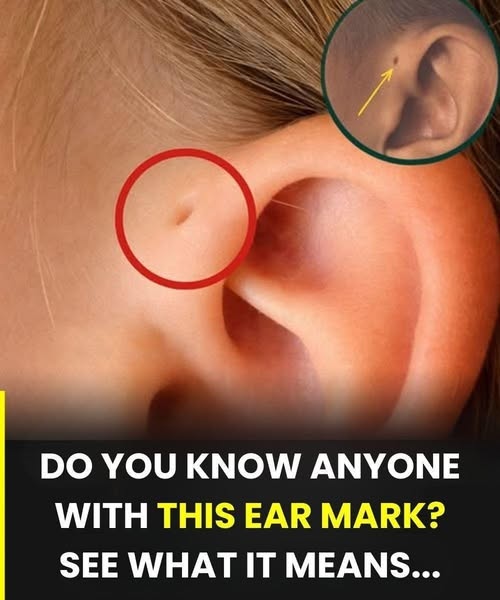
Have you ever noticed a small, tiny hole near the front of the ear—sometimes present since birth and often overlooked? Many people have it without even realizing it has a name or meaning. This small feature is commonly known in medical science as a preauricular pit or preauricular sinus, and while it may look unusual, it is far more common—and more interesting—than most people think.
In this article, we’ll explore what this tiny ear hole really is, why some people have it, what science says about it, and the myths that often surround it. You might even discover that someone in your family has it too.
👂 What Exactly Is This Tiny Ear Hole?
The small hole people notice near the ear is called a preauricular pit. It is a tiny opening located just in front of the ear, usually near where the ear cartilage meets the face.
This feature is congenital, meaning people are born with it. It is not caused by injury, infection, or anything that happens later in life. Instead, it forms during early development in the womb when the outer ear is forming.
In most cases, it is:
- Very small (sometimes barely visible)
- Present on one ear or both ears
- Completely harmless
- Often unnoticed unless carefully observed
Many people live their entire lives without realizing they have it.
🧬 Why Do Some People Have It?
From a scientific perspective, a preauricular pit forms during the early stages of embryonic development when the ear is forming from several small tissue structures that must fuse together properly.
If the fusion is slightly incomplete, a tiny channel or “pit” can remain.
It is often:
- Genetic in some families
- More common in certain populations
- Usually inherited in a simple dominant pattern in some cases
However, having it does NOT automatically mean anything is wrong. It is simply a variation in how human ears develop.
🌍 How Common Is It?
This small ear feature is more common than many people expect. Studies show it appears in a small percentage of the global population, but rates can vary depending on ethnicity and family genetics.
Some people only discover it when:
- A doctor points it out during a routine exam
- They feel a small indentation near the ear
- A family member notices the same feature
Because it is harmless in most cases, many people never even talk about it.
⚠️ Is It Dangerous or a Sign of Disease?