 Skip to content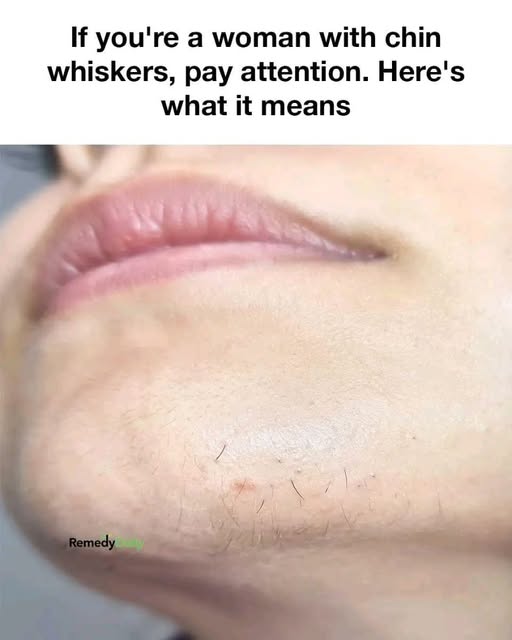
Finding a few coarse “chin whiskers” in the mirror can be surprising—and sometimes even frustrating. Many people assume it’s just a random cosmetic issue, but in some cases, facial hair growth in this area can actually reflect what’s happening inside your body.
The important thing to understand is this: chin whiskers are usually harmless, but when they appear more noticeably or suddenly, they can sometimes be linked to hormonal changes, genetics, or natural life stages.
Let’s break it down in a clear and realistic way 👇
🧬 1. Hormones Play a Major Role
The most common reason for chin whiskers is a shift in hormones—especially androgens, which are often called “male hormones” (though both men and women produce them).
When androgen levels are slightly higher, or when the body becomes more sensitive to them, it can lead to:
- Coarser facial hair
- More noticeable chin or jawline hairs
- Slower but thicker hair growth patterns
This doesn’t automatically mean something is wrong. Hormones naturally fluctuate throughout life due to age, stress, and biological changes.
🌸 2. Polycystic Ovary Syndrome (PCOS)
One of the most well-known medical conditions associated with increased facial hair is:
Polycystic ovary syndrome
PCOS is a hormonal condition that can affect people with ovaries and may cause a combination of symptoms, including:
- Irregular menstrual cycles
- Acne or oily skin
- Weight fluctuations
- Increased facial or body hair (hirsutism)
Chin whiskers in this case are not the only sign, but part of a broader hormonal pattern.
However, it’s important not to self-diagnose based only on a few hairs. Many people with chin whiskers do not have PCOS at all.
🌙 3. Natural Aging and Menopause
As people age, hormone levels naturally shift. During perimenopause and menopause, estrogen levels decline, which can change the balance between estrogen and androgens.
This can result in:
- New or more visible chin hairs
- Thicker facial hair in some areas
- Thinner scalp hair at the same time
These changes are extremely common and part of the body’s natural hormonal transition.
So if chin whiskers appear later in life, it is often related to normal aging rather than a health problem.
🧠 4. Genetics: You May Simply Inherit It
Sometimes the answer is very simple: genetics.
If your mother, grandmother, or other female relatives have similar facial hair patterns, you are more likely to develop them as well.
Genetic traits influence: