 Skip to content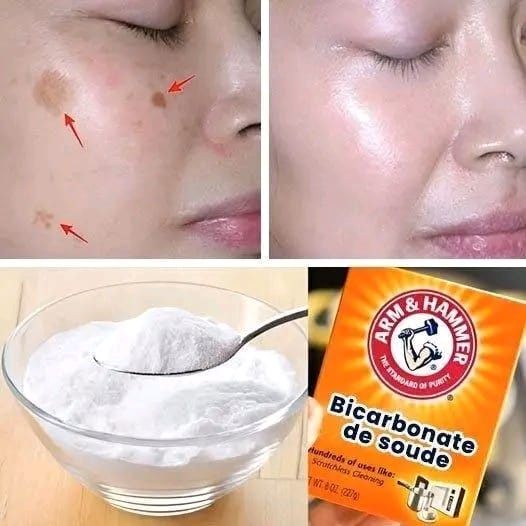
Age spots (also called sun spots or liver spots) are flat, darker areas of skin that often appear with age due to sun exposure and changes in skin pigmentation. They are very common, especially on the face, hands, and arms.
Online, baking soda is sometimes promoted as a quick fix to “erase” age spots. However, it’s important to be clear: baking soda does not remove age spots or permanently change pigmentation. What it can do is gently exfoliate the skin when used carefully, which may make skin look temporarily smoother or brighter.
Let’s look at safe, realistic ways people use it—and what dermatologists actually recommend.
🧠 First: Can baking soda remove age spots?
No.
Age spots are caused by:
- Sun damage over time ☀️
- Melanin buildup in the skin
- Natural aging processes
Baking soda:
- Does NOT target melanin
- Does NOT remove pigmentation
- Can irritate skin if overused
👉 At best, it may act as a mild exfoliant.
⚠️ Important safety note
Skin experts warn that baking soda:
- Has a high pH (can disrupt skin barrier)
- May cause dryness or irritation
- Is not ideal for sensitive or aging skin
Always use caution and never apply harsh scrubs daily.
🌿 1. Gentle baking soda exfoliating paste
How people use it:
- 1 teaspoon baking soda
- A few drops of water
How it is applied:
- Mix into a soft paste
- Gently massage on skin for a few seconds
- Rinse thoroughly
What it may do:
- Remove dead skin cells
- Make skin feel smoother temporarily
⚠️ Use only occasionally (not daily).
🍯 2. Baking soda + honey mask
Ingredients:
- 1 teaspoon baking soda
- 1 teaspoon honey 🍯
Why people use it:
- Honey helps moisturize skin
- Baking soda provides light exfoliation
Possible effect:
- Softer-looking skin
- Temporary glow
⚠️ Not a treatment for pigmentation.