 Skip to content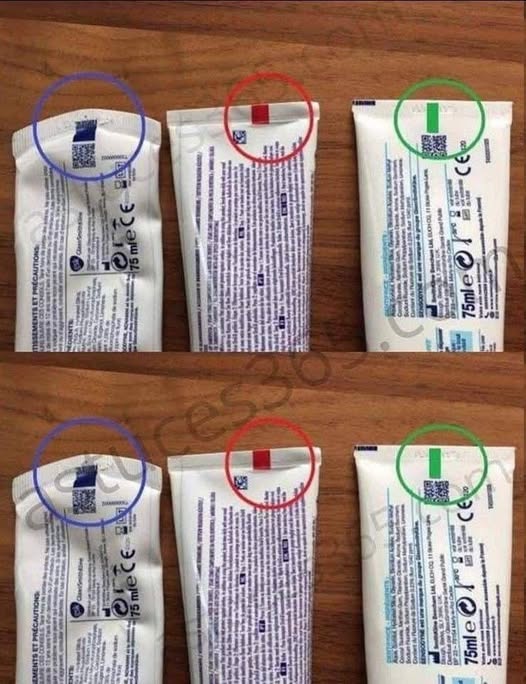
Have you ever noticed the small colored rectangle or square at the bottom edge of a toothpaste tube and wondered what it means? Many people online claim it reveals whether the toothpaste is “natural,” “chemical,” or “safe.”
But the truth is very different—and much simpler.
Let’s uncover what that colored strip really means.
🧪 1. It Has NOTHING to Do With Ingredients
One of the most common myths is that the colored strip tells you:
- If the toothpaste is natural or chemical
- If it is safe or unsafe
- If it contains harmful substances
❌ This is NOT true.
The colored mark does not indicate the quality or ingredients of the toothpaste at all.
🏭 2. It Is a Manufacturing “Eye Mark”
The colored strip is actually called an “eye mark” or “color mark.”
It is used in the production process by machines to:
- Detect where to cut and seal the tube
- Align packaging during high-speed manufacturing
- Ensure printing and folding accuracy
In simple terms, it is a technical sensor mark for machines, not for consumers.
⚙️ 3. Different Colors Have No Meaning for Consumers
You may see colors like:
- Green
- Blue
- Red
- Black
These colors are chosen based on packaging design and printing requirements, not product safety or composition.
So:
👉 Green does NOT mean natural
👉 Black does NOT mean harmful
👉 Red does NOT mean chemical
All of these interpretations are myths.
🧠 4. Why the Myth Became Popular
This misunderstanding spread widely because:
- Social media posts made false claims
- People assumed colors must have meaning
- It sounded logical but was never verified
However, manufacturers and packaging experts have confirmed it is purely a technical printing marker.
🧼 5. How Toothpaste Ingredients Are Really Listed