 Skip to content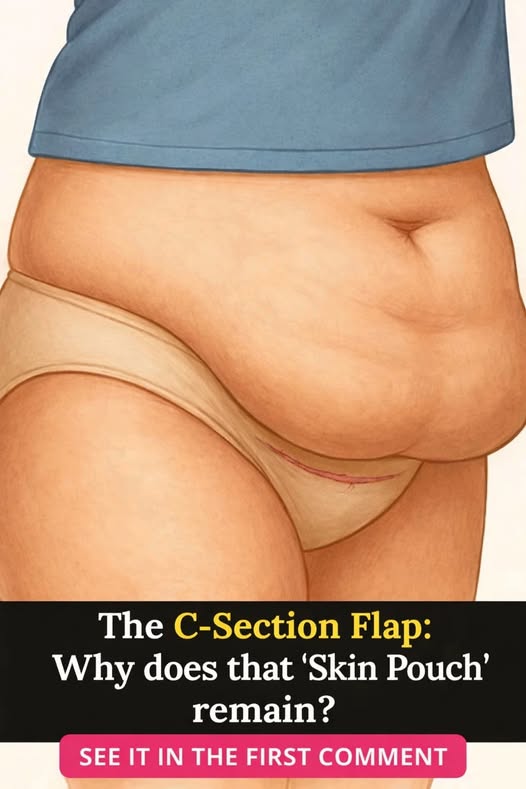
After a Cesarean section, some women notice a soft fold or “pouch” of skin just above the scar. Online, this is often called a “C-section flap” or “lower belly overhang.” Many people misunderstand it, worry about it, or assume it is a surgical mistake.
But in reality, this is usually a normal physical change after pregnancy and surgery, not a complication or defect.
Let’s explain it clearly, medically, and without confusion.
🧠 What Is the “Cesarean Section Flap”?
The so-called “flap” refers to a soft layer of:
- Skin
- Fat tissue
- And sometimes mild abdominal separation
It appears in the lower abdomen after a Cesarean delivery, which is a surgical birth procedure known medically as a Cesarean section.
It is not a “bag left behind” by surgery—it is the result of natural body changes during pregnancy combined with how the body heals afterward.
🤰 Why It Happens: The Real Reasons
There are several normal reasons why this area may remain visible after childbirth:
🧬 1. Skin Stretching During Pregnancy
During pregnancy, the abdomen expands significantly to accommodate the growing baby.
This causes:
- Skin stretching
- Loss of elasticity in some areas
- Separation of fat layers
After birth, the skin does not always fully return to its original tightness.
🧠 2. Muscle Separation (Diastasis Recti)
Many women experience separation of abdominal muscles during pregnancy, called diastasis recti.
This can lead to:
- A softer lower belly appearance
- Reduced core firmness
- A visible bulge even after healing
This is very common and not dangerous in most cases.
🩺 3. Surgical Healing Process
A Cesarean section involves an incision through the abdominal wall and uterus.
After healing:
- Scar tissue forms
- Internal tissues settle differently
- Skin may drape slightly over the incision area
This natural healing process can change the shape of the lower abdomen.
⚖️ 4. Fat Distribution Changes
Hormonal changes during and after pregnancy can affect where the body stores fat.
Some women may notice:
- Fat accumulation in the lower abdomen
- Slower return to pre-pregnancy body shape
This is influenced by genetics, hormones, and lifestyle.
🧠 Is It a Medical Problem?
In most cases, no.
The “C-section flap” is:
- Common
- Non-dangerous
- Aesthetic rather than medical
However, if there is pain, swelling, or unusual symptoms around the scar, medical evaluation is important.
🧘♀️ Can It Be Reduced?
Many women naturally see gradual improvement over time, but changes vary individually.
Supportive approaches may include:
🚶♀️ 1. Gentle exercise (after medical clearance)
- Walking
- Core-strengthening exercises
- Postpartum physiotherapy
🥗 2. Balanced nutrition
Helps with overall body recovery and fat balance.
💤 3. Adequate rest
Recovery after childbirth takes time, especially after surgery.
🧑⚕️ 4. Physiotherapy support
Specialists can help with abdominal muscle recovery.
⚠️ Important Reality Check