 Skip to content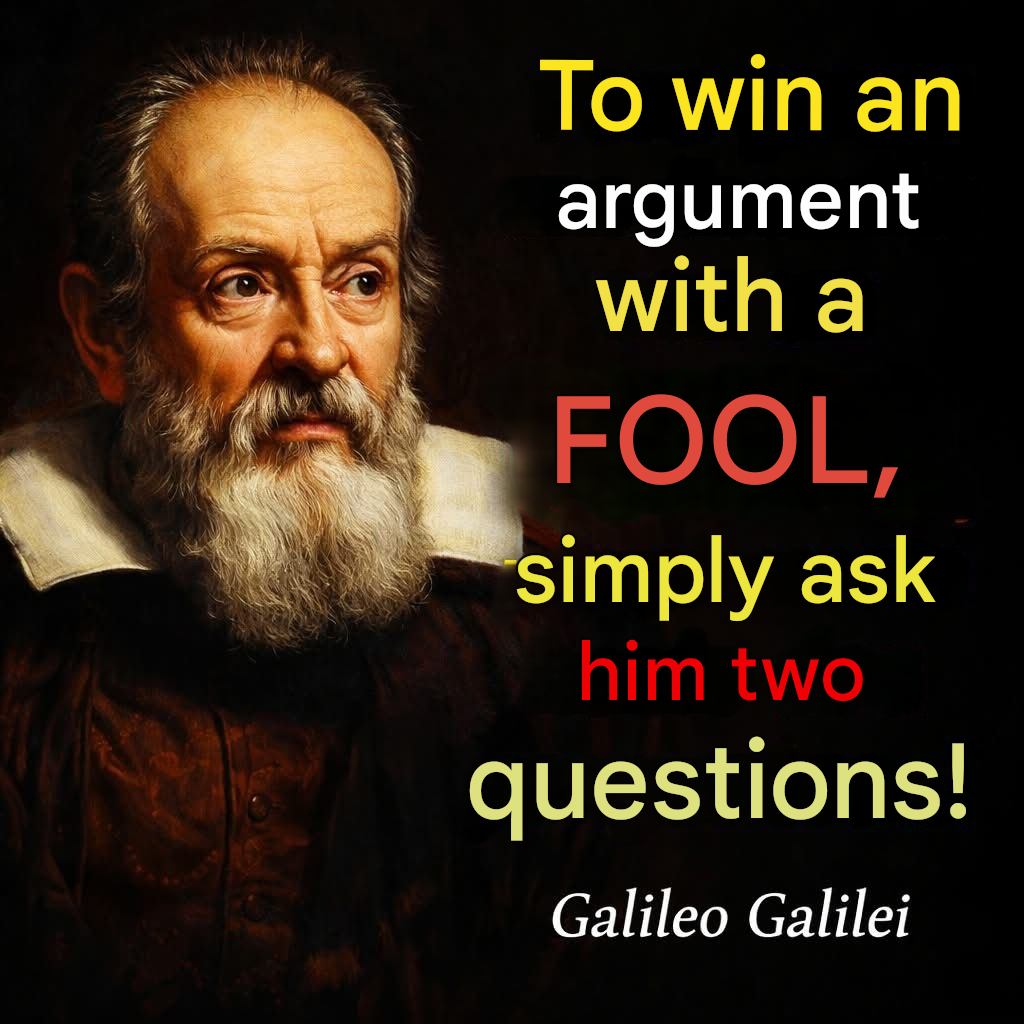
Psychology shows that when people feel attacked in an argument, they often become more defensive and less open to change.
But when communication is calm and factual:
- The brain processes information more rationally
- Defensive reactions decrease
- Understanding becomes more likely over time
In other words, arguing less and demonstrating more is often more effective than confrontation.
🌍 Galileo’s Legacy in Modern Thinking
Galileo’s influence goes beyond astronomy. His way of thinking shaped modern science and critical reasoning.
Today, his approach is reflected in:
- Scientific research methods
- Evidence-based medicine
- Logical problem-solving
- Critical thinking education
His life reminds us that progress often comes from questioning, observing, and reasoning—not shouting or forcing opinions.
🧠 The Real Meaning Behind the Lesson
The idea of “winning an argument with a fool” is not about insulting others. It is about understanding a deeper truth:
👉 Not every disagreement deserves emotional energy
👉 Not every argument can be solved through debate
👉 Wisdom is knowing when to respond—and when to stay silent
Sometimes, the most powerful response is not a comeback, but calm clarity.
⚠️ Important Balance to Remember
While silence and logic are powerful tools, they should not be confused with avoidance.
Healthy communication still requires:
- Respect
- Clear expression
- Boundaries when needed
The goal is not to ignore everything, but to choose battles wisely.
🌟 Final Thoughts
Galileo Galilei’s legacy teaches us more than science—it teaches emotional intelligence and intellectual discipline.
The smartest way to deal with unproductive arguments is not to argue louder, but to think clearer, stay calm, and rely on evidence over emotion.
True wisdom is not about defeating others in conversation. It is about staying grounded in truth, even when the world disagrees.
Because in the end, facts do not need noise—they simply need time to be understood.