 Skip to content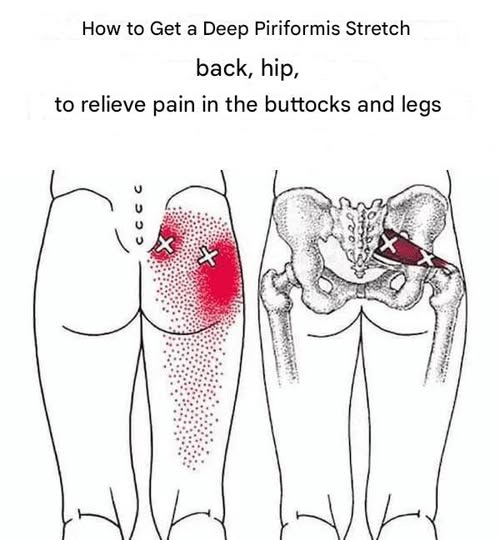
Lower back pain, hip tightness, glute discomfort, and even radiating leg pain are extremely common issues in modern life. One of the hidden culprits behind this discomfort is a small but powerful muscle deep in the buttock area called the piriformis muscle.
When this muscle becomes tight or irritated, it can press on the nearby sciatic nerve, leading to pain that travels from the lower back down into the leg. This is often referred to as piriformis syndrome.
The good news is that targeted stretching can help relieve tension, improve flexibility, and reduce discomfort over time.
Let’s break down how the piriformis works, why it causes pain, and how to safely perform a deep stretch that supports better movement and relief.
🧠 FIRST: What is the piriformis muscle?
The piriformis is a small, deep muscle located in the buttock region. It plays an important role in:
- Rotating the hip
- Stabilizing the pelvis
- Supporting walking and balance
It sits very close to the sciatic nerve, which runs from the lower back down each leg.
👉 When the piriformis becomes tight or inflamed, it can irritate the sciatic nerve and cause pain.
⚠️ Common symptoms of piriformis tightness
People with a tight piriformis may experience:
- Pain in the buttock
- Lower back stiffness
- Hip discomfort
- Tingling or numbness in the leg
- Pain that worsens after sitting
👉 These symptoms often mimic sciatica.
🪑 Why modern lifestyle makes it worse
Daily habits contribute heavily to piriformis tightness:
- Sitting for long hours
- Poor posture
- Lack of movement
- Weak glute muscles
- Repetitive hip positioning
👉 The longer you sit, the more the muscle shortens and tightens.
🧘♀️ THE DEEP PIRIFORMIS STRETCH (Step-by-step)
Below is a safe and effective stretch often recommended in physical therapy.
🔹 Step 1: Lie on your back
- Find a comfortable flat surface
- Bend both knees
- Keep feet flat on the floor
🔹 Step 2: Cross one leg
- Place your right ankle over your left knee
- Form a “figure 4” shape with your legs
🔹 Step 3: Pull gently toward your chest
- Reach behind your left thigh
- Slowly pull both legs toward your chest
- Keep your head and shoulders relaxed