 Skip to content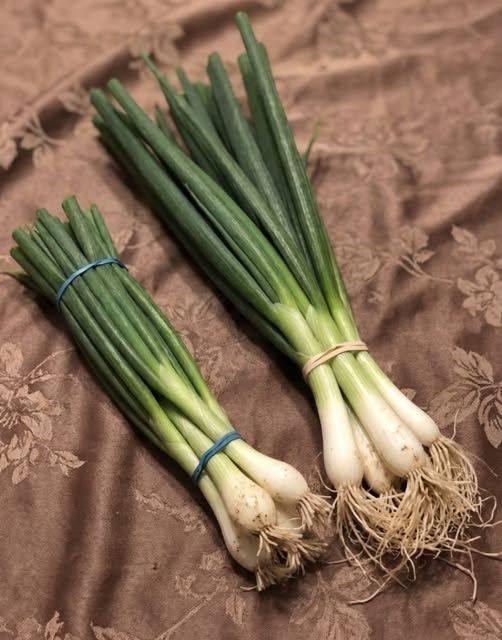
If you’ve ever been confused in the grocery store—or had someone correct you harshly about “green onions” vs “scallions”—you’re not alone. This is one of the most common kitchen misunderstandings in the world, and surprisingly, even experienced home cooks argue about it.
So what’s the real answer?
👉 In most cases, green onions and scallions are the SAME thing.
But the full story is a little more interesting than that.
Let’s break it down clearly so you never get confused again.
🧠🌱 First: What Are We Actually Talking About?
Both “green onions” and “scallions” refer to a type of young onion harvested early before the bulb fully develops.
They have:
- Long green hollow stalks 🌿
- A thin white base 🧅
- A mild onion flavor
- No large bulb like mature onions
These are not fully grown onions—they are simply harvested at an early stage of growth.
So whether someone says “green onion” or “scallion,” they are usually pointing to the same vegetable in your grocery bag.
🌍 Why Two Different Names Exist
The confusion comes from language, region, and cooking culture—not biology.
🇺🇸 In the United States:
- “Green onions” is the most common supermarket label
- “Scallions” is more common in recipes, restaurants, and cooking shows
👩🍳 In professional cooking:
- Chefs almost always say “scallions”
- Cookbooks and culinary schools prefer “scallion” as the standard term
🌎 In other English-speaking countries:
- You may also hear “spring onions,” which adds even more confusion
So the same ingredient has different names depending on where and how you learned cooking.
🧅🔬 Are There Any Real Differences?
This is where things get tricky.
Some people claim there is a difference:
🌿 “Scallions” (as some define them)
- Very thin green stalks
- Almost no bulb at the base
- Mild flavor
- Often younger harvest
🌱 “Green onions” (as some define them)
- Slightly thicker white base
- Small, undeveloped bulb
- Slightly stronger onion taste
BUT here’s the important truth:
👉 These differences are not consistent in real life
Why?
Because:
- Farmers harvest at different stages
- Grocery stores don’t standardize naming
- Countries label them differently
- Even suppliers mix terminology
So what one store calls “scallions,” another store sells as “green onions.”
🛒 Why Grocery Stores Add to the Confusion
If you’ve ever shopped at different supermarkets, you may have noticed:
- Same product, different label
- “Green onions” in one store
- “Scallions” in another store
- Even both labels for identical-looking bundles
This is because grocery naming is based on marketing and regional preference, not strict scientific classification.
So when your MIL said “those are scallions, not green onions,” she was likely referring to terminology—not a real difference in the food itself.
🍳 In Cooking: They Are Completely Interchangeable
In almost every recipe, you can swap them without any issue.
They are used for: