 Skip to content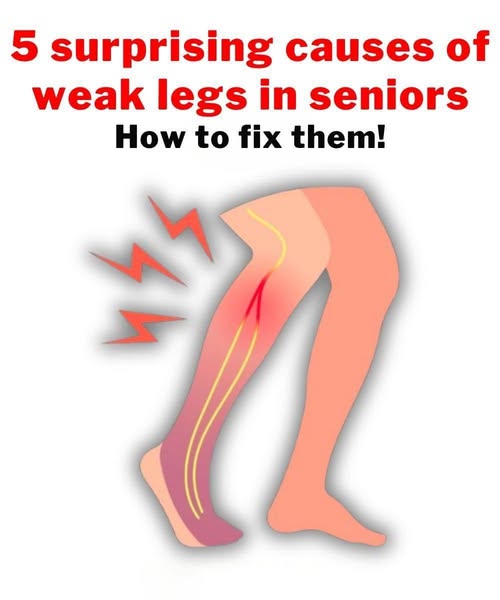
Joint issues are another major cause of weak legs in older adults.
One common condition is Osteoarthritis, which affects cartilage and joint movement.
Symptoms:
- Pain when walking or standing
- Stiffness, especially in the morning
- Reduced flexibility in knees or hips
How to help:
✔ Low-impact exercise (walking, swimming)
✔ Weight management to reduce joint pressure
✔ Warm compress for stiffness
✔ Medical treatment when necessary
Keeping joints mobile is key to maintaining leg strength.
🧘 SIMPLE DAILY HABITS TO IMPROVE LEG STRENGTH
In addition to addressing causes, daily habits can make a big difference:
✔ Move every hour
Avoid sitting for long periods.
✔ Do gentle leg exercises
Even chair exercises can help.
✔ Stay hydrated
Muscles need water to function properly.
✔ Eat balanced meals
Support muscles and nerves with proper nutrition.
✔ Wear supportive footwear
Good shoes improve balance and reduce strain.
⚠️ WHEN TO SEEK MEDICAL HELP
Leg weakness should not be ignored if it is:
- Sudden or worsening
- Accompanied by severe pain
- Causing frequent falls
- Associated with numbness or swelling
These signs may indicate an underlying condition that needs professional evaluation.
🌟 FINAL THOUGHTS
Weak legs in seniors are not just a normal part of aging—they often have identifiable and manageable causes such as muscle loss, poor circulation, nutrient deficiencies, nerve problems, or joint conditions.
The good news is that many of these issues can be improved with:
- Gentle movement
- Proper nutrition
- Medical support when needed
- Healthy daily habits
Maintaining leg strength is essential for independence, confidence, and quality of life.
Aging does not have to mean losing mobility—it means adapting, caring for the body wisely, and staying active in safe and consistent ways.