 Skip to content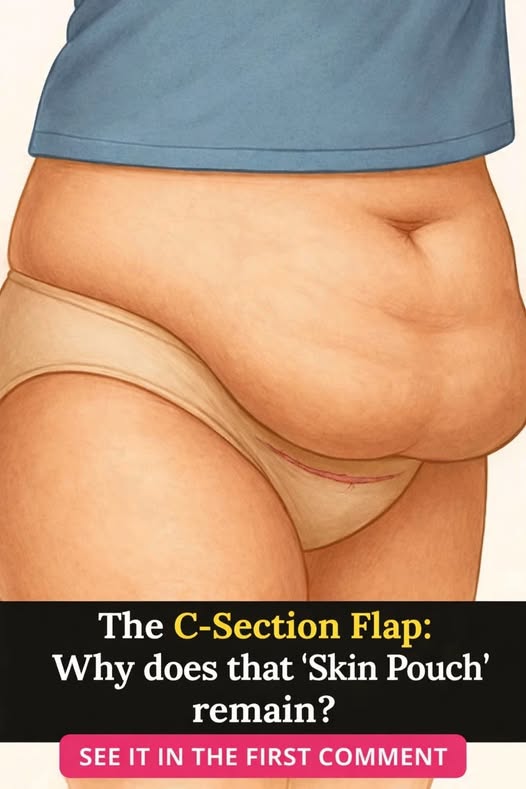
Many women notice something unexpected after a C-section: even months or years later, a soft “fold,” “pouch,” or small overhang of skin remains above the scar area. Online, it is often described in dramatic terms like a “bag of skin that won’t go away.”
But medically, what is this really—and why does it happen?
Let’s explain it clearly and respectfully 👇
🩺 What Is a Cesarean Section?
Cesarean section is a surgical procedure where a baby is delivered through an incision in the abdomen and uterus. It involves cutting through multiple layers of tissue, including skin, fat, and muscle.
Because it is both a pregnancy and a surgery, the body goes through major physical changes during recovery.
🧬 Why Does the “Flap” or Pouch Remain?
The so-called “C-section flap” is not a medical disease. It is usually a combination of normal post-pregnancy changes, including:
🧷 1. Skin Stretching
During pregnancy, the abdominal skin stretches significantly to make room for the growing baby.
After birth, the skin:
- May not fully shrink back
- Loses some elasticity
- Can form a soft fold above the scar
This is completely normal and varies from person to person.
🧠 2. Fat Distribution Changes
Hormonal changes during and after pregnancy affect how fat is stored in the body.
The lower abdomen is a common area where:
- Fat may remain after pregnancy
- Fat distribution shifts downward
- A small pouch becomes more visible
🩹 3. Scar Tissue Formation
After surgery, the body forms internal scar tissue as part of healing.
This can sometimes:
- Pull the skin slightly inward
- Create uneven texture
- Contribute to a “step” or fold above the incision
💪 4. Abdominal Muscle Separation
During pregnancy, abdominal muscles can stretch apart. This condition is called:
Diastasis recti
When these muscles separate, the abdomen may appear less firm or more rounded, even after weight loss.
⏳ 5. Healing Takes Time
Postpartum recovery is not instant. The body needs time to:
- Repair tissues
- Rebuild muscle strength
- Adjust hormones
- Rebalance fat distribution
For many women, full recovery can take months or even longer.
⚠️ Important Truth: It Is NOT a “Defect”