 Skip to content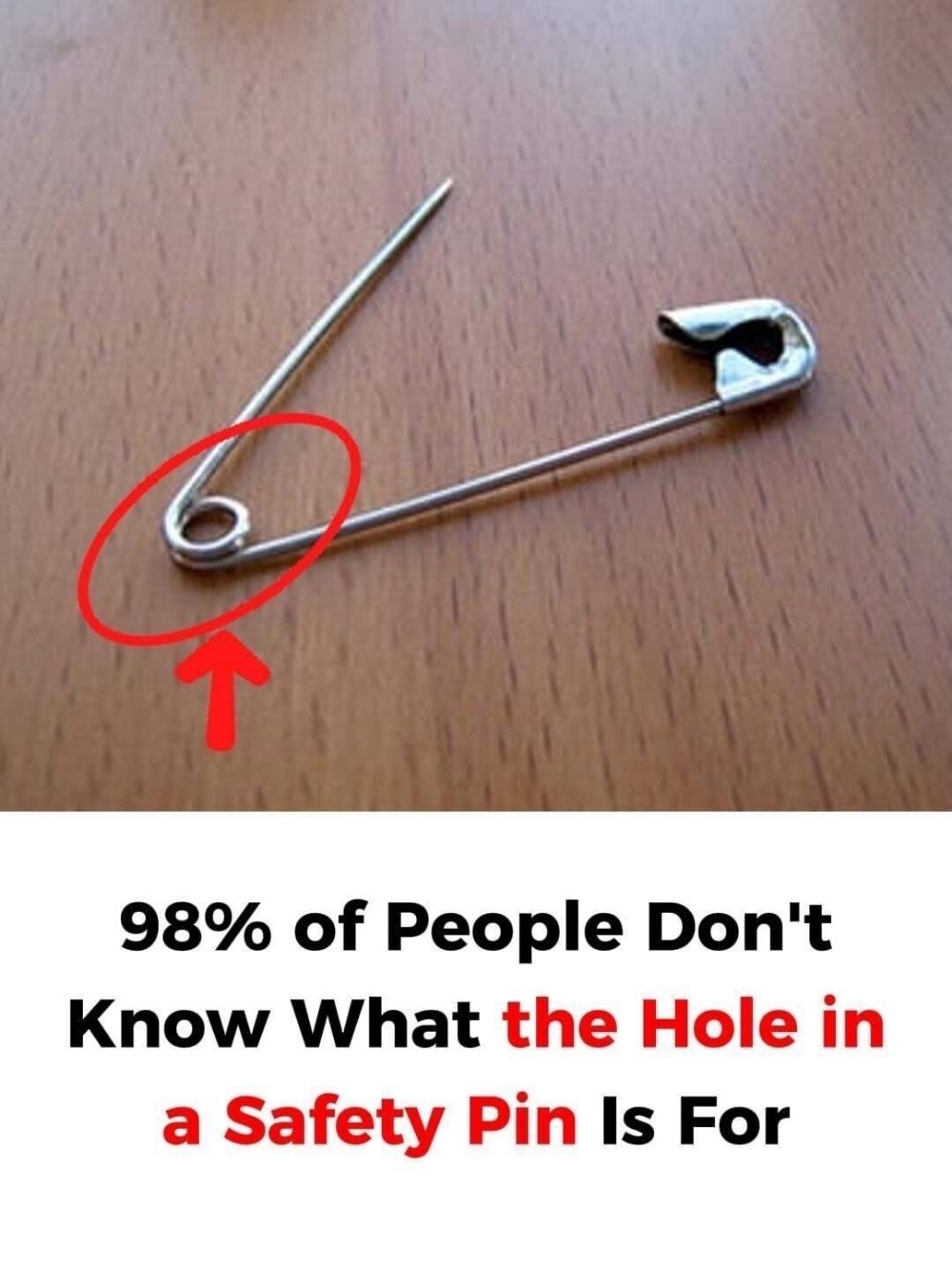
Beyond its structural purpose, that tiny hole can actually be used in clever ways:
1. Attaching a Thread or String
You can pass a thin thread through the hole to:
- Guide the pin through fabric more easily
- Use it for sewing hacks or quick fixes
2. Creating a Temporary Pull Tool
Need to pull elastic through a waistband or hoodie? Attach a string to the hole and use the safety pin as a guide—it makes the process much smoother.
3. Organizing Small Items
Some people use the hole to connect multiple pins or attach them to a keyring, making them easier to store and access.
It’s a small feature—but incredibly versatile once you know how to use it.
🧠 Why Most People Never Notice
The truth is, we use everyday objects on autopilot. We rarely stop to question:
- Why something is shaped a certain way
- Whether every part has a purpose
- Or how design influences function
This is a perfect example of hidden design intelligence—where even the smallest detail has a reason behind it.
It’s not that the information is hidden—it’s just overlooked.
📜 A Bit of History
The safety pin was invented in 1849 by Walter Hunt, an American mechanic. Interestingly, he designed it as a quick solution to pay off a debt.
His design included:
- A coiled spring for tension
- A clasp to cover the sharp end
- And a structure that has remained largely unchanged for over a century
That tiny hole? It has been part of this efficient design from the beginning, helping maintain the pin’s durability and usability.
💡 Everyday Objects Are Smarter Than You Think