 Skip to content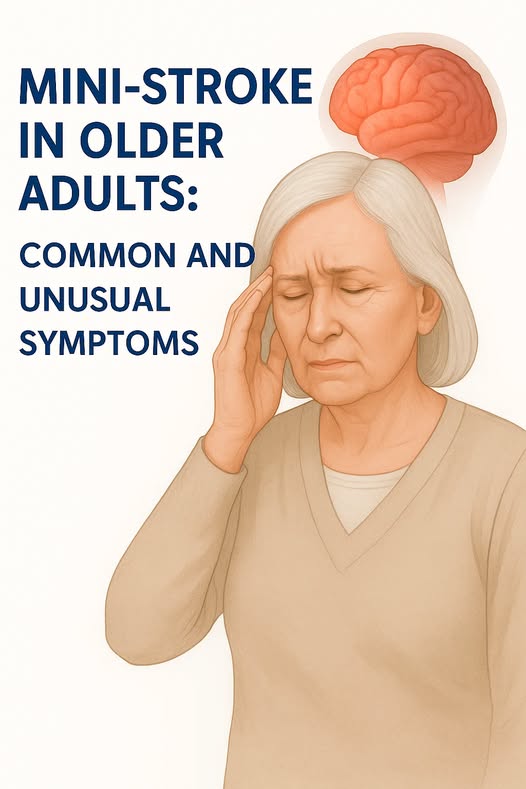
A mini-stroke may sound harmless because of its name, but medically it is anything but minor. A “mini-stroke” is commonly known as a transient ischemic attack (TIA), and it happens when blood flow to part of the brain is briefly blocked.
Even though symptoms may disappear within minutes or hours, a TIA is a major warning sign. It often means a full stroke could happen soon if no action is taken.
For seniors especially, recognizing the early warning signals can be life-saving.
Here are 5 critical health signals you should never ignore.
🧠 1. Sudden Weakness or Numbness on One Side
One of the most common signs of a mini-stroke is sudden weakness, numbness, or tingling—especially on one side of the body.
This may affect:
- Face (drooping on one side)
- Arm (loss of strength or control)
- Leg (difficulty walking or standing)
Even if it improves quickly, it should never be ignored.
🗣️ 2. Sudden Difficulty Speaking or Understanding Speech
A mini-stroke can affect the brain’s language centers.
Warning signs include:
- Slurred or unclear speech
- Trouble finding words
- Difficulty understanding simple sentences
If someone suddenly cannot communicate normally, it is a medical emergency.
👁️ 3. Sudden Vision Problems
Temporary vision changes can also signal a TIA.
This may include:
- Blurred vision
- Loss of vision in one eye
- Double vision
These changes may appear suddenly and last only a short time, but they are still serious warning signs.
⚖️ 4. Loss of Balance or Coordination
A mini-stroke can affect the part of the brain responsible for movement and balance.
Seniors may suddenly experience:
- Dizziness
- Trouble walking straight
- Loss of coordination
- Feeling unsteady or confused physically
This can increase the risk of falls and injuries.
😵 5. Sudden Confusion or Memory Trouble
Another important sign is sudden mental confusion.
This may look like:
- Difficulty understanding surroundings
- Sudden memory lapses
- Disorientation
- Trouble focusing or making decisions
These symptoms can come on quickly and may be mistaken for fatigue or aging—but they should always be taken seriously.
⚠️ Why a Mini-Stroke Is So Dangerous