 Skip to content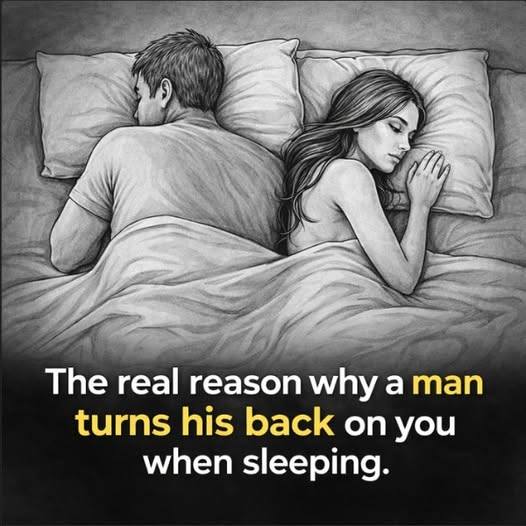
It’s one of those small moments that can quietly spark big questions. You’re lying in bed, everything seems calm, and then you notice—your partner has turned their back to you.
Is it a sign of distance? Disinterest? Or something else entirely?
Before jumping to conclusions, it’s important to understand that sleeping positions often say more about comfort and habit than relationship problems. Still, they can sometimes reflect emotional dynamics in subtle ways.
Let’s explore what it really means when your partner sleeps facing away from you.
🛏️ 1. It Often Means They Feel Comfortable and Secure
Surprisingly, turning away doesn’t usually signal a problem. In many healthy relationships, it actually indicates comfort.
When someone feels safe and relaxed with their partner, they don’t feel the need to maintain constant physical contact. Turning away can simply mean:
- They’re at ease
- They trust the relationship
- They can fully relax
In other words, it’s not distance—it’s security.
🌙 2. It Can Be About Sleep Quality, Not Emotions
Let’s be honest—sleep matters. A lot.
People naturally adjust their position to get better rest. Facing away can help with:
- Breathing more comfortably
- Reducing heat
- Finding a preferred sleeping posture
Your partner may just be trying to get a good night’s sleep, nothing more.
🔄 3. It Might Be a Habit, Not a Message
Many people have a “default” sleeping position they’ve had for years—long before the relationship even began.
If your partner has always slept on one side or facing a certain direction, it’s likely just muscle memory kicking in.
💞 4. It Can Still Show Connection (Yes, Really)
Even when facing away, couples often maintain small points of contact—like touching backs, legs, or feet.
This is sometimes called the “back-to-back but touching” position, and it’s actually associated with:
- Emotional closeness
- Mutual respect
- Healthy independence
It’s a balance between connection and personal space.
⚖️ 5. When It Might Signal Something Deeper