 Skip to content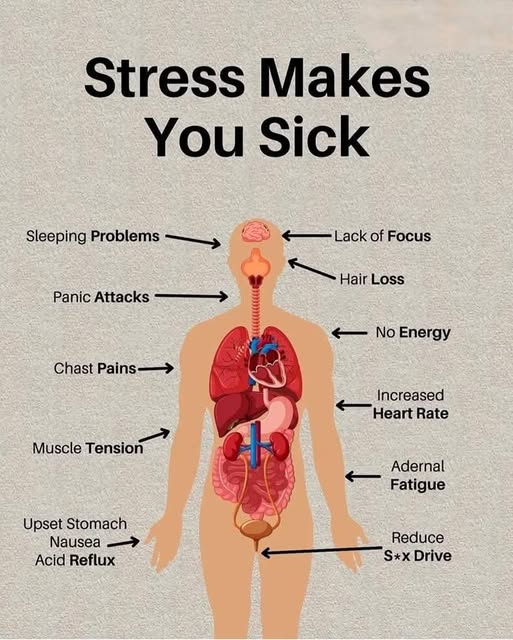
Stress is something almost everyone experiences—but many people underestimate how deeply it can affect the body and mind. It’s not just “feeling busy” or “being under pressure.” Chronic stress can slowly influence multiple systems in your body, from your heart to your sleep.
The good news is that stress is manageable once you understand how it works and how to respond to it effectively.
Let’s break it down in a simple and practical way.
🧠 What Exactly Is Stress?
Stress is your body’s natural response to challenges or pressure. When you feel stressed, your body releases hormones like cortisol and adrenaline to help you react quickly.
This response is part of a natural survival system called “fight or flight.”
👉 In short-term situations, stress can be helpful.
👉 But when it becomes constant, it starts affecting your health.
❤️ 1. How Stress Affects the Heart
One of the most important effects of long-term stress is on cardiovascular health.
Chronic stress may:
- Increase heart rate
- Raise blood pressure
- Put strain on blood vessels
Over time, this can increase the risk of heart-related problems, especially when combined with poor lifestyle habits.
Stress doesn’t directly “damage” the heart instantly, but long-term exposure can create unhealthy conditions.
🧠 2. Impact on the Brain and Mental Health
Stress has a direct effect on the brain.
It can lead to:
- Difficulty concentrating
- Memory problems
- Anxiety or constant worry
- Mood swings or irritability
Long-term stress is also linked to mental health conditions such as Anxiety disorder and can contribute to symptoms of depression.
When stress becomes chronic, the brain stays in a heightened alert state, making it harder to relax.
💤 3. Stress and Sleep Problems
One of the most common effects of stress is poor sleep.
You may experience:
- Trouble falling asleep
- Waking up during the night
- Early morning awakening
- Feeling tired even after sleeping
Stress keeps the mind active when it should be resting, disrupting natural sleep cycles.
Over time, poor sleep can make stress even worse—creating a cycle that is hard to break.
🧬 4. Stress and the Immune System
Chronic stress can weaken the immune system.
This may result in:
- Getting sick more often
- Slower recovery from illness
- Increased inflammation in the body
When the body is constantly producing stress hormones, it prioritizes “survival mode” over long-term repair and defense.
🍽️ 5. Digestive System Disruption
Stress also affects the gut and digestion.
Common effects include:
- Stomach discomfort
- Bloating
- Changes in appetite (overeating or loss of appetite)
- Irritable bowel symptoms
The gut and brain are closely connected, so emotional stress often shows up physically in digestion.
🧘♀️ 6. How to Manage Stress Effectively