 Skip to content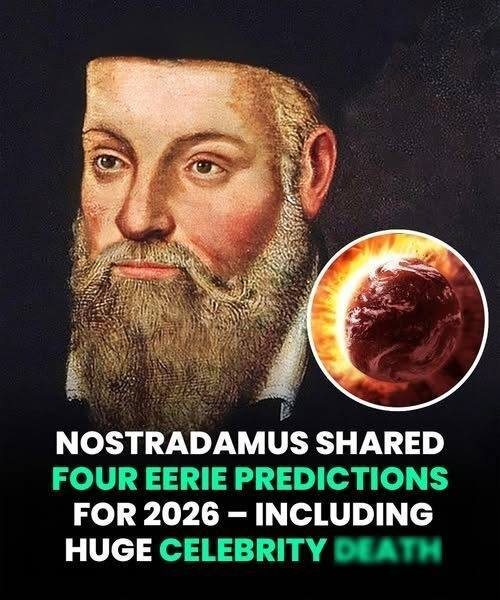
Most historians and scholars agree on one key point:
Nostradamus’ writings are:
- Highly symbolic
- Written in ambiguous language
- Open to multiple interpretations
Because of this, many “predictions” are often matched to events after they occur, rather than before.
Academic analysis suggests there is no scientific evidence that Nostradamus had true predictive abilities.
💭 Why People Still Believe in Them
Despite skepticism, Nostradamus’ predictions remain popular because:
- They are mysterious and dramatic
- They often seem to match real-world fears
- They are widely shared on social media
- People are naturally drawn to future predictions
In uncertain times, such prophecies tend to gain even more attention.
🌍 Final Thoughts
The 2026 Nostradamus predictions—ranging from war and strange natural events to a possible celebrity death—are part of a long tradition of interpreting his cryptic writings.
While they make for fascinating stories and viral headlines, it is important to remember that:
- They are not verified facts
- They are based on interpretation, not evidence
- They should be viewed as entertainment, not certainty
Still, they continue to spark curiosity around the world and remind us how deeply people are fascinated by the unknown future.
In the end, whether 2026 brings dramatic events or ordinary days, one thing remains clear: the mystery of Nostradamus continues to capture global imagination centuries after his time.