 Skip to content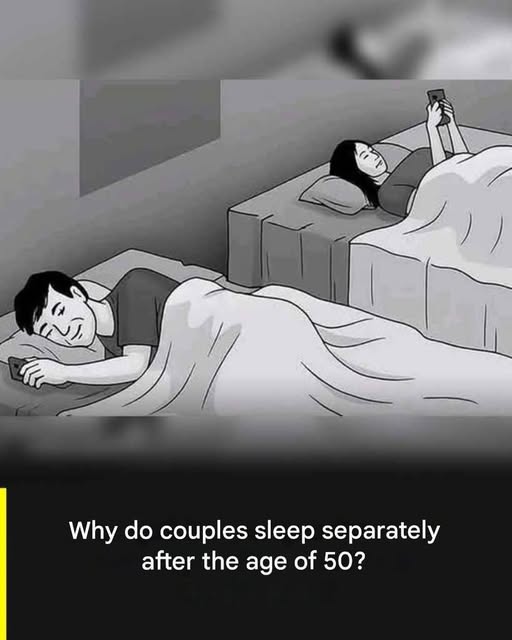
Contrary to popular belief, sleeping separately does not always mean a relationship is in trouble. In many long-term relationships, emotional bonds remain strong even when sleeping arrangements change.
Some couples report that separate sleep actually improves their relationship because:
- They feel more rested
- They argue less about sleep disruptions
- They enjoy more quality time during the day
In other words, love and sleep habits do not always have to follow the same pattern.
🧘 6. Stress Reduction and Personal Space
After decades together, many couples develop a deeper appreciation for personal space. Sleeping separately can provide:
- A sense of independence
- Reduced nighttime stress
- More relaxation before sleep
Personal space at night does not reduce closeness—it can sometimes enhance it by preventing small irritations from building up.
❤️ 7. Maintaining Intimacy in New Ways
One common concern is whether sleeping apart affects intimacy. For many couples, intimacy simply changes form over time.
Instead of sharing a bed every night, couples may focus more on:
- Emotional connection during the day
- Planned quality time together
- Physical closeness in other moments
In fact, better sleep often leads to improved mood and stronger emotional connection.
🧩 8. Lifestyle Changes After Retirement
After 50, especially post-retirement, daily routines change significantly. Without early work schedules, sleep patterns may shift.
One partner may prefer going to bed early, while the other stays up later reading, watching TV, or using devices. These differences naturally lead to mismatched sleep schedules.
Separate sleeping arrangements can help each person maintain their preferred routine without disturbing the other.
🏠 9. Cultural and Modern Trends
In some cultures, sleeping separately has become a practical and even common choice among older couples. It is no longer seen as unusual or negative.
Modern relationships are increasingly focused on:
- Individual well-being
- Health and comfort
- Emotional quality rather than physical proximity during sleep
This shift reflects a broader understanding that strong relationships can adapt over time.
⚠️ When Sleeping Separately May Be a Concern