 Skip to content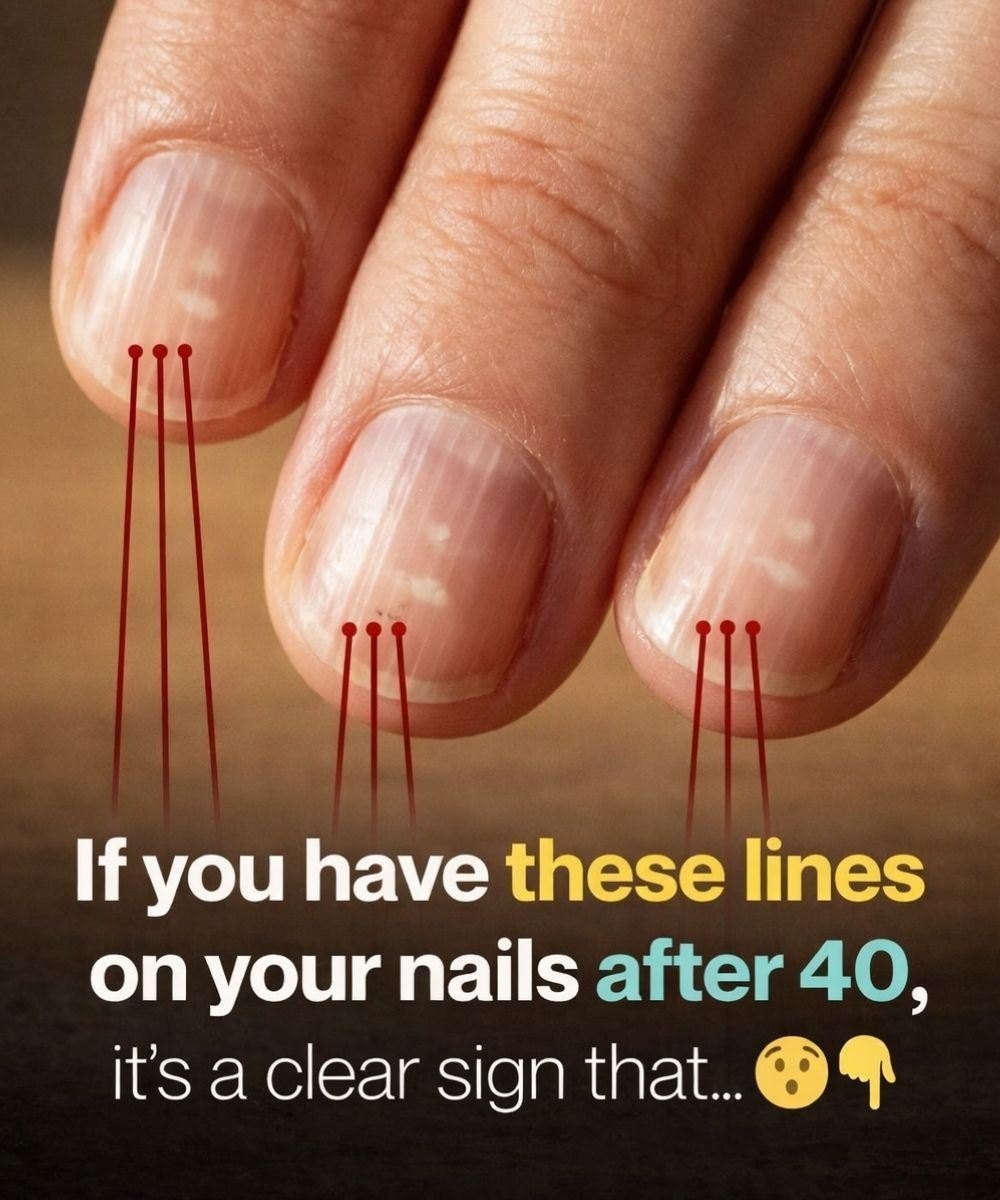
Have you ever looked closely at your fingernails and noticed faint vertical lines running from the base to the tip? If you’re over 40, you’re not alone. Many people begin to see these subtle ridges appear with age—but what do they really mean?
According to experts in dermatology and nutrition, vertical nail lines—also known as longitudinal ridges—are often completely normal. However, in some cases, they can provide clues about your overall health, lifestyle, and even nutritional status. Understanding what your nails are trying to tell you can help you make smarter decisions about your well-being.
Let’s break down what these lines might indicate—and when it’s worth paying closer attention.
What Are Vertical Nail Lines?
Vertical lines on the nails are thin ridges that run from the cuticle (the base of the nail) to the tip. Unlike horizontal ridges, which may signal more serious health concerns, vertical ridges are usually harmless and tend to become more noticeable as you age.
Doctors often compare them to wrinkles on the skin—just another natural part of the aging process. As the body gets older, nail growth slows down, and the nail matrix (the tissue that produces new nail cells) can become less efficient. This can lead to changes in texture, including the appearance of ridges.
The Role of Aging
One of the most common reasons for vertical nail lines after 40 is simply aging. As your body changes, so do your nails. Reduced oil production and slower cell turnover can cause nails to become drier and less smooth.
This is why many people notice that their nails not only develop ridges but also become more brittle or prone to splitting. While this may seem concerning at first, it is generally a normal and expected change.
Could It Be a Sign of Nutritional Deficiencies?
In some cases, vertical nail ridges may be linked to nutritional imbalances. Your nails are made primarily of keratin, a type of protein, and they require a steady supply of vitamins and minerals to stay healthy.
Deficiencies in nutrients such as:
- Iron
- Vitamin B12
- Magnesium
can sometimes contribute to changes in nail texture, including ridging. For example, low iron levels may also cause nails to become thin or spoon-shaped, while a lack of B vitamins can affect overall nail strength.
If your ridges are accompanied by other symptoms—like fatigue, weakness, or pale skin—it may be worth discussing with a healthcare professional.
Hydration and Nail Health
Another factor that can influence the appearance of your nails is hydration. Just like your skin, your nails need moisture to stay smooth and flexible.
Dry nails are more likely to develop visible ridges. Environmental factors such as frequent handwashing, exposure to harsh chemicals, or dry climates can make this worse.
Using hand creams, nail oils, and staying well-hydrated can help improve the overall appearance of your nails over time.
When Should You Be Concerned?