 Skip to content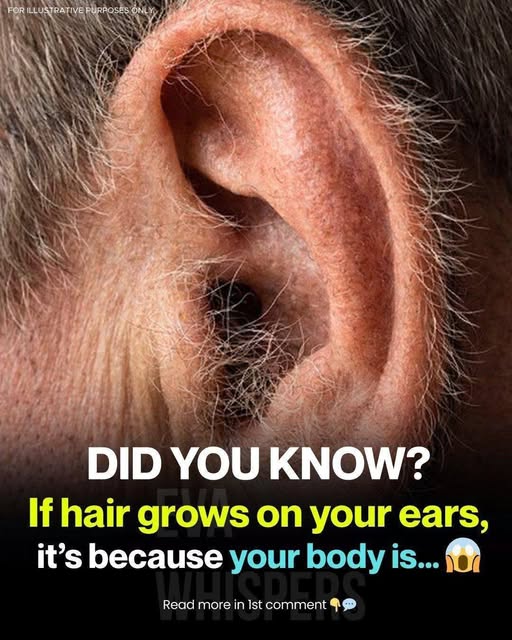
Finding hair growing on or around the ears can surprise many people, especially as they get older. It’s often seen as unusual or even a little concerning—but in reality, it’s usually a completely natural part of how the body changes over time.
So what does it actually mean when ear hair appears? Is it a warning sign, a random occurrence, or simply genetics at work?
Let’s break it down in a clear, realistic way so you understand what’s really going on.
🧬 1. Genetics Play the Biggest Role
The most important factor behind ear hair is genetics.
If your parents or grandparents had visible ear or body hair, there’s a higher chance you will too. Your genes influence how hair grows, where it grows, and how thick or noticeable it becomes.
In simple terms:
👉 It’s usually not a sign of illness
👉 It’s just how your body is naturally programmed
Some people barely notice ear hair at all, while others develop it more visibly over time.
⏳ 2. Hormonal Changes with Age
As men and women age, hormone levels naturally shift.
In particular, androgens (male hormones present in all genders) can affect hair growth patterns. Over time, these hormones may:
- Increase hair in certain areas (like ears, nose, or eyebrows)
- Decrease hair in others (like the scalp in many men)
This is why ear hair tends to become more noticeable after middle age.
It’s not unusual—it’s part of the body’s natural aging process.
🧓 3. It Often Increases With Age
Ear hair is much more common in older adults than younger people.
As the body ages:
- Hair follicles can become more active in certain areas
- Growth cycles may change
- Hair may become thicker or darker
This is why ear and nose hair often appear later in life even if they were not noticeable before.
🧠 4. It Has a Biological Purpose
While it might seem unnecessary, body hair—including ear hair—actually has protective functions.
Ear hair helps:
- Reduce dust and small particles entering the ear canal
- Provide a mild barrier against debris
- Support the ear’s natural cleaning system
It’s not a perfect shield, but it is part of the body’s built-in protection system.
⚠️ 5. When Should You Pay Attention?