 Skip to content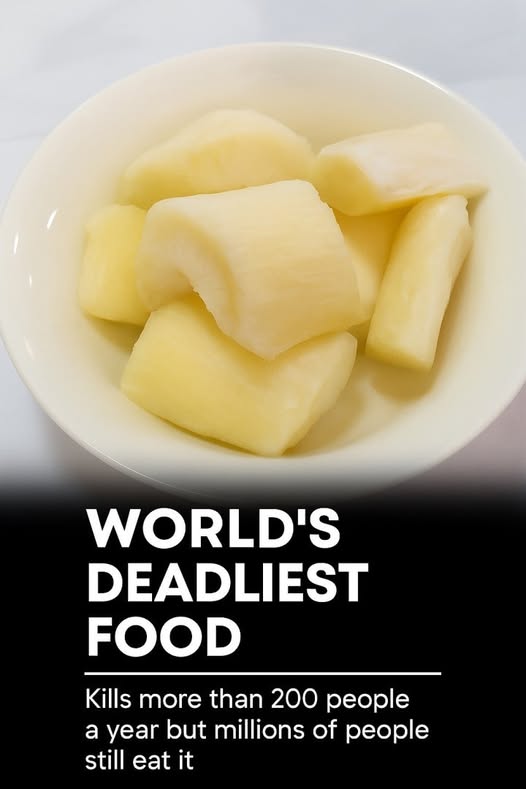
When you think of deadly foods, your mind might jump to exotic poisons, rare mushrooms, or dangerous seafood. But what if one of the most lethal foods on Earth is something eaten regularly by nearly half a billion people? Even more surprising—it’s not illegal, not rare, and not always considered dangerous by those who rely on it every day.
Welcome to the fascinating and alarming story of cassava—a staple food that feeds millions, yet carries hidden risks that can turn deadly when handled improperly.
🌍 A Lifeline for Millions Around the World
Cassava, also known as manioc or yuca, is a root vegetable widely consumed in parts of Africa, Asia, and Latin America. It’s a crucial source of calories for many communities, especially in regions where other crops struggle to grow.
One of cassava’s biggest advantages is its resilience. It thrives in poor soil, tolerates drought, and can remain underground for long periods without spoiling. This makes it a reliable “food security crop”—a lifeline during times of famine or economic hardship.
From cassava flour used in baking to traditional dishes like fufu and tapioca, this root is deeply woven into cultural cuisines. For many families, it’s not just food—it’s survival.
⚠️ The Hidden Danger Beneath the Surface
Despite its benefits, cassava has a dark side. The plant naturally contains compounds called cyanogenic glycosides. When consumed, these compounds can release cyanide—a potent toxin that interferes with the body’s ability to use oxygen.
Yes, the same cyanide known for its deadly reputation.
If cassava is not prepared correctly, the cyanide levels can remain high enough to cause serious health problems—or even death.
☠️ How Dangerous Is It Really?
Every year, more than 200 people are reported to die from cassava-related poisoning. But the real number may be higher due to underreporting in rural areas.