 Skip to content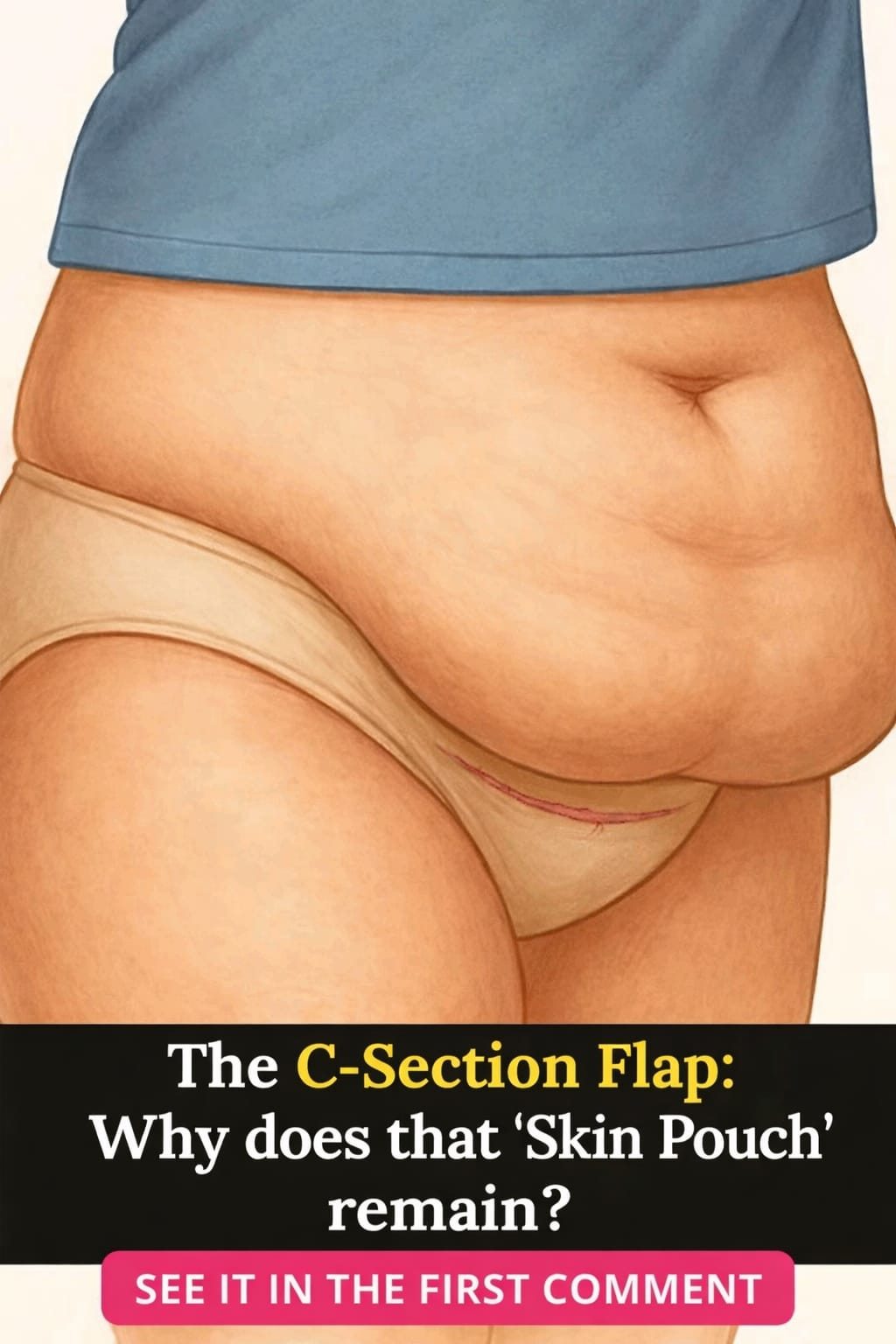
A cesarean section (C-section) is a major abdominal surgery used to deliver a baby. While it is often medically necessary and life-saving, many women notice a change in their lower abdomen afterward—sometimes described as a soft “flap,” “pouch,” or “bag of skin” above the scar.
This is common, natural, and often misunderstood. Let’s explain what it really is and why it happens.
🧠 First: What People Call the “Flap”
After a C-section, some women notice:
- A soft fold of skin above the incision
- A small or larger lower belly pouch
- A “shelf-like” appearance over the scar
This is not a separate organ or medical complication in most cases. It is usually a combination of skin, fat, and changes in abdominal structure after pregnancy and surgery.
🤰 1. Skin stretching during pregnancy
During pregnancy, the abdomen stretches dramatically to accommodate the growing baby.
This leads to:
- Loss of skin elasticity
- Stretch marks
- Loose skin after delivery
Even after weight loss, skin does not always fully retract, especially after a full-term pregnancy.
👉 This is one of the main reasons the “flap” remains.
🪡 2. The C-section incision changes how tissue heals
A C-section involves cutting through several layers:
- Skin
- Fat
- Abdominal muscles (in some cases separated, not cut)
- Uterus
After healing:
- Scar tissue forms
- Tissue can slightly “stick” or fold differently
- The lower abdomen may sit differently than before
This can create a small overhang or pouch appearance.
🧬 3. Muscle separation (diastasis recti)
During pregnancy, the abdominal muscles often separate to make room for the baby. This condition is called diastasis recti.
It can cause:
- A soft belly bulge
- Reduced core strength
- Difficulty flattening the lower abdomen
👉 This is very common after pregnancy, whether delivery was vaginal or C-section.
⚖️ 4. Fat distribution changes after pregnancy
Hormonal changes during and after pregnancy can affect fat storage.
Some women experience:
- Fat accumulation in the lower abdomen
- Slower return to pre-pregnancy body shape
- Changes in metabolism and body composition
This can contribute to the appearance of a “flap.”
🧘 5. Healing position and gravity
After surgery:
- Scar tissue heals in a fixed position
- Gravity naturally pulls soft tissue downward
- Sitting posture and core weakness can make the area more visible
Over time, this may become more noticeable if core muscles are not strengthened.
💡 Important truth: it is not “damage” or a mistake