 Skip to content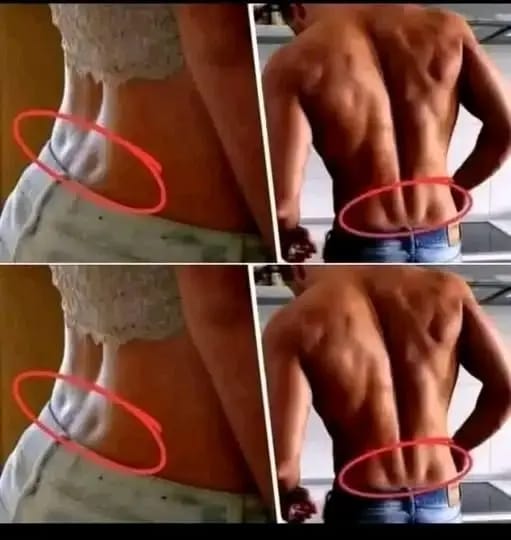
Have you ever noticed two small, symmetrical dimples just above someone’s buttocks and wondered what they mean? Maybe you have them yourself and never thought much about it—or maybe you’ve heard people call them “attractive” or even “mysterious.”
These small indentations on the lower back are often known as Venus dimples (or “back dimples”), and they’ve been the subject of curiosity, beauty trends, and even myths for years.
But what do they actually mean? Are they rare? Do they say anything about your health—or personality?
Let’s break it down in a simple, clear, and surprising way.
🌿 First Things First: What Are Lower Back Dimples?
These dimples appear on the lower back, right above the buttocks, where the pelvis connects to the spine. Medically, they are related to small gaps where skin is attached to underlying structures near the posterior superior iliac spine.
In simple terms:
They are natural indentations in your body’s structure.
There is nothing “created” or artificial about them—they are part of human anatomy.
✨ Are They Rare?
Not exactly rare, but not everyone has them clearly visible.
Whether you have visible lower back dimples depends on:
- Your genetics
- Your body fat distribution
- Muscle tone
- Skin structure
Some people have very defined dimples, while others have faint ones that only appear in certain positions or lighting.
So if you have them, you’re not unusual—you’re just seeing a natural variation of human anatomy.
💖 Why Are They Called “Venus Dimples”?
The name comes from Venus, the Roman goddess of beauty and love.
Over time, these dimples became associated with attractiveness in many cultures, especially in art and media. They are often seen as a symbol of:
- Symmetry
- Physical aesthetics
- Natural body structure
However, this is more cultural perception than scientific fact.
🧬 What Causes Them?
Lower back dimples are mostly determined before birth.
They form where skin is slightly tethered to the pelvis, creating a small visible indentation. Because this structure is genetic, you cannot “create” or permanently develop them through exercise.
That said, their visibility can change depending on:
- Body fat percentage
- Muscle tone in the lower back and glutes
- Posture
This is why they may look more noticeable on some people than others.
🏋️♀️ Do They Mean You’re Fit or Healthy?
This is one of the biggest myths.
Having lower back dimples does not automatically mean you are fit, healthy, or more attractive, and not having them does not mean the opposite.
They are simply an anatomical trait—not a health indicator.
Some athletic individuals have them clearly visible, while others do not. The same is true across all body types.
😍 Why People Find Them Attractive