 Skip to content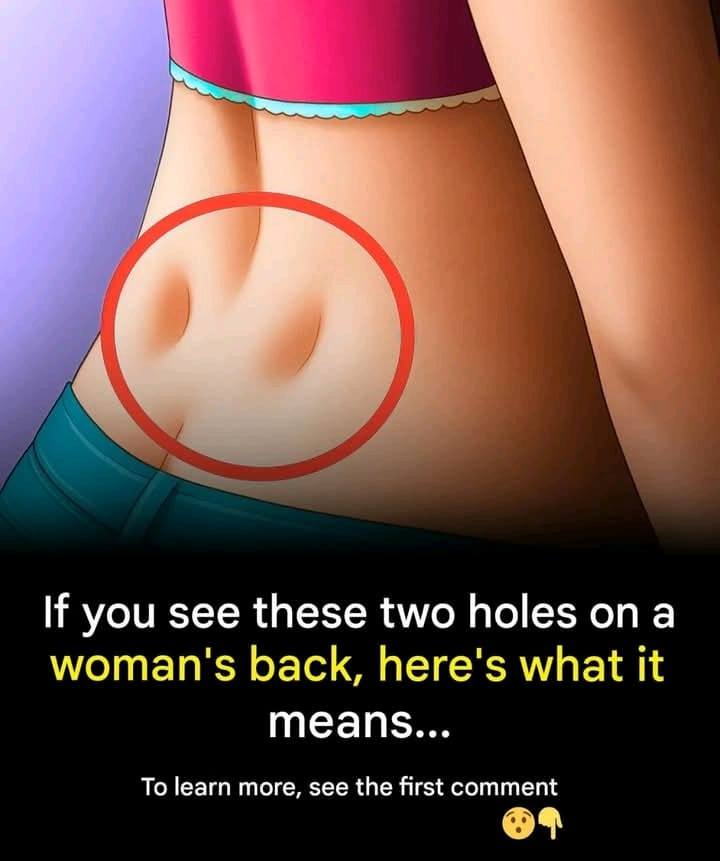
In many cultures, symmetry is linked to attractiveness. Lower back dimples naturally appear in a symmetrical position, which is why some people find them appealing.
They are often associated with:
- Body balance
- Natural curves
- Aesthetic structure
But beauty is subjective, and not having them does not make anyone less attractive.
⚠️ Are They Linked to Any Health Condition?
In adults, they are completely harmless.
However, it’s worth noting:
- In newborns, unusual or deep dimples near the spine are sometimes checked by doctors
- In adults, normal Venus dimples have no medical significance
So for healthy adults, they are just a normal body variation.
💡 The Real Meaning Behind Them
The simplest truth is this:
👉 Lower back dimples have no hidden meaning
👉 They do not represent personality, health, or fitness
👉 They are just a natural anatomical trait
Any deeper “meaning” is cultural or aesthetic, not scientific.
🌿 Final Thoughts
Lower back dimples, or Venus dimples, are simply one of many natural variations in the human body. Some people have them, some don’t—and neither is better or worse.
While culture often associates them with beauty, the real truth is much simpler: they are just a result of genetics and anatomy.
Because in the end, what makes a body interesting is not one small feature—but the uniqueness of the whole person. ✨