 Skip to content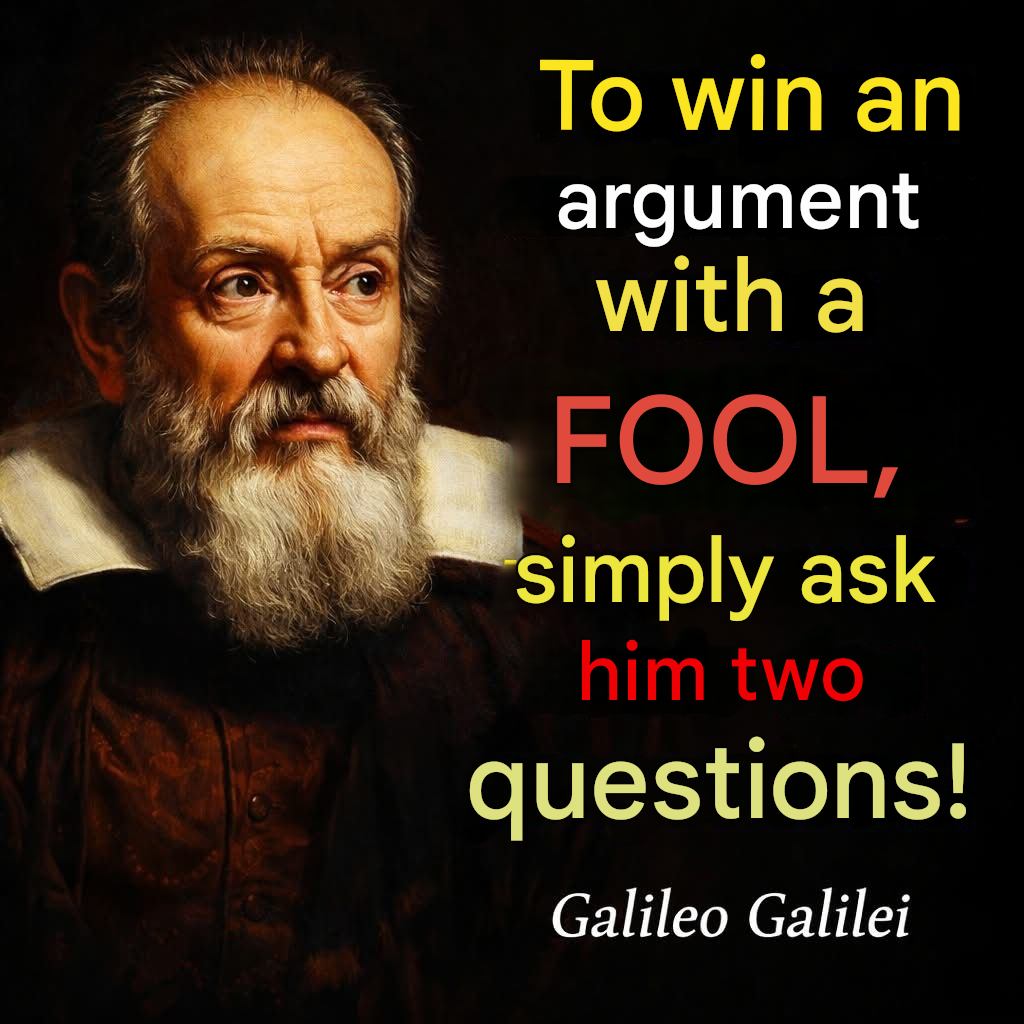
Sometimes, the strongest response is no response.
If a discussion becomes:
- Repetitive
- Hostile
- Closed-minded
then continuing it often leads nowhere.
Knowing when to step back preserves:
- Mental energy
- Emotional balance
- Personal dignity
Silence is not weakness—it can be strategy.
🧬 6. Knowledge Evolves, Even If People Don’t
A key lesson from Galileo’s era is that new ideas are often resisted at first.
Over time, however:
- Evidence accumulates
- Understanding improves
- Old beliefs are replaced
This teaches us that being “right too early” can still feel like being “wrong” in the moment.
🧠 7. The Real Win: Clarity, Not Victory
The goal of communication should not always be to defeat someone in an argument.
A healthier mindset is:
- Seeking understanding
- Clarifying truth
- Maintaining respect
Sometimes the smartest “win” is leaving a conversation with your integrity intact.
🌟 Final Thoughts
The idea often linked to Galileo Galilei is not about disrespecting others or avoiding dialogue. It’s about understanding a deeper truth:
👉 You don’t need to fight every battle to be right.
👉 You don’t need to convince everyone to stand by the truth.
👉 And you don’t need to win arguments that don’t lead anywhere meaningful.
In life, the smartest people don’t always argue the most—they observe, think clearly, act wisely, and choose their battles carefully.
Because in the end, real intelligence is not about winning arguments…
It’s about knowing which ones are worth having at all.